BLOG
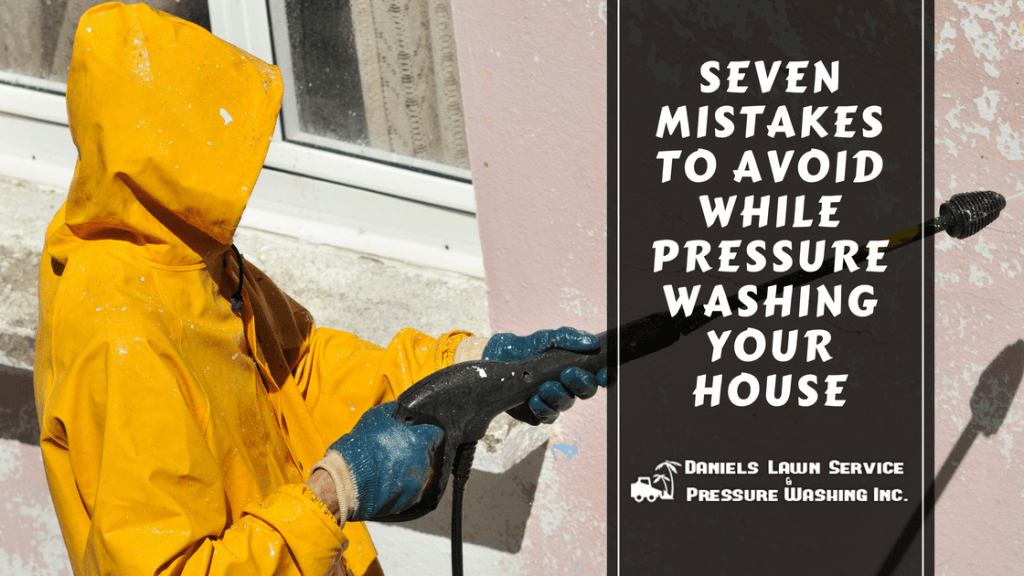
Seven Mistakes to Avoid While Pressure Washing Your House
Summer is the season of outdoor fun in Central Florida, but also of outdoor maintenance chores. If you’ve taken visual inventory of your property, you may have noticed that your house needs a good exterior cleaning. Which leads us to pressure washing – and choices.
Home shopping networks are now deep in the hard-sell of compact pressure washers, with live demonstrations of shutters, gutters, decks, walkways and patio furniture quickly cleaned of dirt and mildew. Of course, the company representative wielding the nozzle makes the job look effortless. For those who consider such equipment too lightweight to do the job properly, DIY Network’s Dylan Eastman – Project Manager for Blog Cabin – posted a step-by-step article, “How to Use a Pressure Washer.” If you’re planning to take the DIY approach, Eastman offers excellent advice – including the pros and cons of buying a pressure washer versus renting.
As for tackling the task itself, avoid the following 7 mistakes to ensure your safety and success
Not using the right pressure washing equipment – As seen by the above examples, pressure washers are available in a wide range of sizes.
Popular Mechanics Senior Home Editor, Roy Berendsohn, provides a quick run-down in his article, “How to Pressure Wash Your House.”

“First, unless you have a very small house (or a house that’s not particularly dirty), it’s likely that an electric machine is not powerful enough to do the job. These machines are better suited to cleaning cars, small boats and patio furniture. Pressure-washer capacity is measured in cleaning units, the product of water pressure (in PSI, or pounds per square inch) multiplied by flow rate (in GPM, or gallons per minute). An electric pressure washer may operate at 2400 cleaning units; a homeowner-grade gas engine model can get up to 6210 cleaning units, and professional machines can hit 16,000 cleaning units (4000 psi and 4 gpm). Cleaning units translate directly into effectiveness.”
Not using the right safety equipment – How old is your ladder, and is it appropriate for the job? Standing on a ladder while operating a pressure washer is an obvious danger – one that alone may influence your decision to leave this to the pros.
Using excessive pressure – This is one of the most common mistakes homeowners commit.
Many pressure washers are capable of as much as 3,000 PSI – more than enough to punch holes in siding, erode cement, damage wood decks and cause serious injury. Angie’s List recommends starting with the lowest setting and working your way up if you find yourself facing stubborn stains.
Not allowing the cleaning solution to soak in – The detergent needs some time to adhere to grime before rinsing. Being too eager to do the job as quickly as possible will defeat the purpose. Allow to soak for at least three to five minutes.
Using only water – We have seen many homeowners commit this mistake. While this may clean surface dirt, a cleaning solution is necessary to remove accumulated grime and mildew. If mildew is the prevalent issue on your home’s exterior, a solution specific to killing mildew spores will be necessary.
Not having a plan and not being aware of hazards – The two parts of this common mistake are related. Many homeowners don’t know where to start and end the process. Begin at the roof and work down. When you know what to clean and in which order, you are aware of the need to avoid aiming at certain areas, which include your home’s electrical service entrance cable, the electrical meter, exterior outlets and exterior lights. Avoid blasting water upward at a steep angle under siding. Also, don’t blast directly into corners, under the edge of windows and doors or into dryer or attic vents.
Hitting water-sensitive areas – Avoid such area as door openings, windows that are not watertight and drywall ceilings on covered patios.
Obviously, pressure washing a house is not for the faint of heart, those with limited physical strength or those with limited time. Hiring a professional service – such as Daniel’s Lawn Service & Pressure Washing Inc. – to do the honors will ensure a thorough job performed by our experienced team members. Contact us today to see how easy – and economical – a professional home exterior cleaning can be!
How To Detect & Control Florida Crabgrass

Know how to identify and control crabgrass!
Florida is widely known for its limited weather selection of sunshine or hurricanes. Those very seasons are what make caring for your lawn more difficult. The on-again, off-again rain and shine creates the potential for an onslaught of resilient crabgrass. Despite its lavish appearance, this grassy weed won’t do any favors for your yard.
Lawns in Florida are susceptible to crabgrass largely due to the spring sun and summer hurricane seasons. The two closely coincide with the plant’s germination cycle and create the ideal environment for the plant to thrive. Florida’s dry season runs from October to April, and is perfect for creating sun-scorched or bare spots in your lawn. The exposed soil creates a direct route for a surplus of water to reach the seeds. Without a dense root system from healthy grass to compete against, the crabgrass is free to grow and spread. For this same reason they are prone to any edging, for example, against a sidewalk, where there is not a lot of turf and rain often pools.
What does crabgrass look like?
The first step to controlling crabgrass is determining if the weed is present. When identifying crabgrass, it is easier to consider the appearance by estimating its age. Crabgrass seedlings will resemble a
small corn plant, with blades around ¼” wide. They are light green in color, and quickly develop side shoots that spread across the ground in a star-like pattern. The plant’s width separates it from normal lawn grass, which is much thinner and grows up from a central point. Utilize the crabgrass pictures shown to help identify the stage of the weeds in your lawn.
Unbeknownst to many, crabgrass seeds are already in your lawn’s soil, and can last for years from the time they are spread. The seeds begin to germinate in early spring, around May and June, when temperatures reach 65° to 70° Fahrenheit. Around July and August, the crabgrass will have breached the soil and is more noticeable in thinner patches of lawn. At their peak, crabgrass will sprout a head and drop their seeds. Following the first bout of cold weather, they will die and leave a patch in your lawn where the plant will take off again next year. This cycle will continue unless you are able to stop the seeds from sprouting.
Why is crabgrass bad?
While crabgrass may not look terrible, its removal will have you in a fit. Complete crabgrass removal is a tricky task – however, the plant can be controlled. It is highly unlikely that you will ever entirely kill the crabgrass, as thousands of seeds are released every year. In order to prevent it from the likely possibility of spreading, you would need to kill every single seed. To do so would mean killing the healthy grass surrounding it and reseeding. Considering that the seeds can last for several years, this makes success nearly impossible. Rather than killing your lawn in an attempt to get rid of crabgrass, we encourage management with a dense root system.
How do I control and prevent crabgrass?
Achieve a dense root system by keeping a lush and healthy lawn. When possible, fertilizing your lawn will help strengthen the existing roots and maintain color. Always ensure that you are cutting the grass high enough that the soil won’t be over-watered. This will also prevent the chance of sun scorching, creating thin areas for future weeds.
The best crabgrass preventer is a pre-emergent herbicide. The granular herbicide creates a chemical barrier at the soil line that crabgrass cannot penetrate. It should be applied prior to the soil reaching 60° Fahrenheit, around late March or early April. The weed, unable to breach the soil barrier, will not be able to sprout a seed head. It is important to remember, however, that the potency of the pre-emergent can be diminished within three to six weeks under Florida’s intense sunlight and rain. To overcome this obstacle, use a post-emergent herbicide to halt any shoots that manage to break through the soil and haven’t reached three to four inches. This crabgrass killer will stop the spread of seeds – and your frustration – from rolling into next year.
What products should I use to control crabgrass?
When considering what crabgrass herbicide to use, there is a wide array of
options. Depending on the extent of damage the weed is causing to your lawn, contemplate the product as well as its potency. Scotts Halts Crabgrass and Grassy Weed Killer is readily available at most retailers with an outdoor department and is a highly rated pre-emergent. Drive XLR8 is a professional post-emergent weed killer that is less available at a retailer and is best left to a licensed and insured lawn care company. It will kill crabgrass as well as the area around it where seeds may have fallen, leaving an orange patch until winter. For your lawn’s sake, we recommend contacting a professional if you feel your lawn has reached such a dire point.
At Daniel’s Lawn Service & Pressure Washing our experts prioritize lawn care and know how hard maintenance can be. Let us take a load off your shoulders, so you can get back to appreciating your lawn instead of working on it. Contact us today to see the services we offer!
Spring Weed Control Tips For Florida Yards & Landscapes

Handle Your Grass…
…With Our Spring Lawn Care Tips!
Last month, we covered in our blog the beautiful flowers you would want in your spring landscape. However, not all sorts of plants are desirable for your garden. Weeds are definitely one of them. Weeds are plants in the wrong place, with more bad qualities than good ones. They are highly competitive and grow quickly, stealing water, light, space and nutrients from your garden plants. They are the result of improper irrigation, fertilization or mowing practices. Let’s discover the most common types of Florida grass weeds, and look at the best weed killer control methods that can help us put an end to these unpleasant yard visitors!
Florida Crabgrass

Crabgrass is an annual weed with branching and spreading stems. It is the result of over-and under-watering as well as mowing the lawn too short, too often. Crabgrass is one tough opponent. The most effective way for controlling it would be the use of pre-emergent herbicides. However, this product should be applied in early spring, before the crabgrass seed sprouts. By using this method, you would be creating a chemical barrier in the soil, where the seeds will take in and die.
Torpedo Grass

Torpedo grass is mostly found in shores along the Gulf Coast, from Florida to Texas. It usually develops in poorly drained soil. Once established, torpedo grass is extremely difficult to kill. It is the result of improper fertilization and soil sanitation.
Goosegrass

Goosegrass is one of the most resilient lawn weeds, taking advantage of any weak spot in your yard. It is a heat-loving plant, the seeds of which can become established in hard soils. Goosegrass is usually the result of over-watering. To control it, you should rely on proper lawn care along with a pre and post emergent herbicide.
Dandelion

Dandelion is a familiar spring weed that spreads numerously in full sunlight. It is extremely hard to eliminate, since the entire plant needs to be removed or it could grow right back. Killing the whole plant will keep new weeds from establishing themselves in your lawn. The best way to prevent dandelions is to maintain a thick lawn and to mow it at a high setting. You can also use a post-emergent herbicide and spot-spray them, as it will not kill grass.
Dollarweed

Dollarweed has round-shaped leaves and stems that root into the soil, causing rapid weed growth. Dollarweed plants grow in moist, poor soil, gardens and unplanted areas. The best way to prevent their growth is to reduce your lawn’s water supply, and to mow it high, allowing your grass to grow thick and develop a deeper root system, outcompeting dollarweed.
How to Control & Kill Weeds
We have looked at the different types of weeds that could attack your Florida yard during spring season. Now it is a matter of finding the right weed control method that can help you maintain a proper lawn and prevent weeds from ruining your garden design. Here are the most effective weed-killing methods.
Hand-Pulling
The best time to hand-pull weeds is when the soil is moist. For this method to be effective, you should make sure you remove the whole plant with its roots.
Proper Lawn Care
Fertilize your lawn frequently every six to eight weeks during growing season. This helps your lawn stay thick, leaving little space for the unwanted weeds. Also, mowing your lawn at a taller height shades the soil, making it harder for the weed seeds to sprout, since their growth relies heavily on sunlight. Another weed killer would be proper irrigation. Watering heavily and infrequently is the key to a thick grass and deeper roots, giving the unpleasant weeds tough competition.
Herbicides
A pre-emergent herbicide kills weeds when applied prior to the sprouting of the weeds in your soil. The chemicals prevent all seeds from germinating, even grass seed.
Post-emergent herbicides work on actively growing weeds. They can be selective, only targeting weeds, or non-selective, killing everything they come in contact with. Although this method is highly costly and not environment-friendly, it could be very effective, if used properly.
Choosing the appropriate herbicide from your local store can be a tough task, but this weed prevention method could be the best way for maintaining a proper lawn.
For more tips on spraying your yard with weed killer, The Lawn Care Nut from Bradenton covers the best weed killers for lawns, and gives a demo on how he likes to mix and apply it.
With spring upon us, the challenge that weeds present in maintaining a perfect lawn and garden may be constant, but, as we’ve learned here, not impossible to win. Our experts at Daniel’s Lawn Service & Pressure Washing can help you keep weeds at bay and ensure a beautiful outdoor environment. We invite you to contact us to learn about the full range of services we offer to make your home the pride of the neighborhood!
Spring Flowers You Want In Your Central Florida Garden

Did you know that flowers make us happier and have strong positive effects on our emotional well-being? Well, get ready for a big dose of happiness as spring approaches Central Florida with its beautiful, colorful blooms! Here are some ideal flowers that will certainly make you look forward to the warm weather. They’re among our favorites here at Daniel’s Lawn Service & Pressure Washing, and some of them even pair well with the bee and butterfly plants we mentioned in January.
Crossandra “Orange Marmalade”

Our first pick would be the crossandra “orange marmalade” flower. Known for its easy-growing nature and attractive foliage, the orange marmalade cannot stand the cold weather, making it ideal for Floridians. Who wouldn’t love to see the color orange radiating from their garden?
Queen’s Wreath

The beautiful tropical vine, also known as petrea or purple wreath, will grow perfectly in a 9b zone and a Central Florida climate. You could grow this plant on your gated entrance, fences or even on trees! It will grow best in full sun but can also tolerate partial shade, drought, wind and medium salt air. Make sure you water the plant frequently as it begins to establish itself. Once it does, it will need very little care and can make your life easier, as it has no major pest problems. How ideal would that be?
Cannas

These flowers could grow to become unusual and stunning, if they are grown properly. Yes, they need your full dedication and attention, unless you want deadly looking flowers decorating your backyard. Cannas love the sun and water, so make sure you water them frequently. They also spread and bloom in different colors during summer, which attracts butterflies and hummingbirds. These flowers need constant care, from watering, to fertilization, to deadheading. But if you are motivated to do the work, the results can be great!
Calla Lilies

Calla lilies are very well-suited to grow in Florida’s warm climate. These flowers would be the perfect touch of elegance and beauty to your garden. They bloom in many different colors: white, pink, purple, yellow, bi-color and salmon. Calla lilies prefer to grow in sunny spots where the soil is rich and moist. You should maintain a perfect balance between giving these plants enough sun while making sure you also give them enough water to protect them from drying out. As summer approaches, give these flowers more water and allow them to blossom, making your home more colorful and beautiful.
Caladiums

If you’re looking for a low-maintenance, long-lasting and colorful addition, caladiums are the perfect fit for your spring garden. Caladiums are unique when it comes to their foliage: no leaf is like the other! Although their leaves are stunning, they are easily damaged by strong wind, so make sure you plant them in a protected area.
Dahlias

Dahlias grow in an unlimited variety of shapes, colors and sizes. These flowers worship the sun – that’s why it would be best to plant them where they can get six to eight hours of direct sunlight a day. Although dahlias prefer soil that is rich and moist, they can tolerate drought. Another tip would be to remove the flowers as soon as they fade, in order for the plant to bloom again. Growing dahlias is quite easy and rewarding, as you get a beautiful result with small effort. Their colors and shapes give them a unique beauty that makes gardeners addicted to planting more of those gorgeous flowers.
All of these beautiful flowers are ideal to plant in spring season here in Central Florida. What better way to say to your neighbors, “Come and enjoy coffee in my colorful backyard?” With little effort and a lot of patience, your happiness could start blooming straight from your home garden! And, by the way, Daniel’s Lawn Service offers landscape design services that can bring your vision of a Central Florida paradise into stunning reality – and maintain it year ‘round. Call us today to make your dream lawn and garden come true!
How Much Water Does Your Yard Need?

Are You Overwatering Your Lawn?
Having a healthy lawn in Florida can be trickier than you would imagine, especially in the fall. The reason being is that Florida doesn’t experience typical seasons. Rather, we have Hurricane, Rain, and Dry Season. This puts a stress on our lawns, going from overwatering to underwatering.
As an average, Florida receives 50 inches of water annually. With grass requiring an inch, to inch-and-a-half of water a week, this comes out to a good amount of water. However, because of Florida’s seasons, this rainfall isn’t distributed evenly throughout the year, leaving your yard parched from November to April.
So, you may wonder, how to water your yard in Florida’s unique climate? While there is no one answer, it can be relatively simple to figure out.
How Long Should You Water Your Lawn?
To determine how long you should water your lawn, you’ll first want to determine how much water your grass is receiving from your sprinklers. There are special rain gauges you can buy, but all you really need is a tuna can.
Make note of how deep the can is (they’re typically an inch), then leave it for 30 minutes in a part of your yard that collects water. Measuring how full it is, you can then extrapolate how much water your lawn received. If it is a half-inch full, then an hour and a half of watering is all your yard needs a week.
While that’s the general rule, because of Florida’s intense summer temperatures, it’s possible that you will have to water more frequently in the hotter months. One way to determine this is by inserting a 6-inch screwdriver into the ground. If you can stab it in with no problem, then you should be fine. If you have resistance, or can’t pierce the ground, then your soil is too packed and dry, and needs to be watered deeper.
Signs of overwatering can be that the grass is dying (despite being watered regularly). or the water overflowing from your yard into the street. Keep on the lookout for this if you have recently experienced a lot of rain, and your sprinklers are on a timer.
How to Water New Sod
If you have recently laid some new sod, you may be cautious about having it dry out. However, one of the most important things to remember is to not overwater. It is important for the roots to dig into the ground, but if there is too much water, the roots will settle at the top, because they don’t need to dig. This means your sod will never settle, and rather just sit on the surface, making it less resistant to stressful conditions.
Local Watering Regulations for Orange, Seminole, Volusia and Osceola Counties

Many people may not realize that Central Florida counties have a lawn watering schedule. If you have service provided by OUC, and your address ends in an even number, you should water on Thursdays and Sundays. Those with odd-numbered addresses water on Wednesdays and Saturdays.
Other counties have their own regulations on when to water, so make sure you check with their website, or your water provider, to know when to schedule your sprinklers. Following these schedules will help you plan how much to water each day of the week, and help maintain your lawn.
As schedules get busier, lawns become neglected in the chaos. Let experienced lawn care services Daniel’s Lawn Service ease your stress by handling your Florida landscaping needs.
We’re Buzzing About Bee and Butterfly Gardens!

How to Plant a Bee and Butterfly Friendly Garden
There are many reasons to landscape your yard, including stress relief, and the fact that plants help the environment by absorbing carbon dioxide from the air. However, one of the often overlooked benefits is the opportunity to provide a habitat for native fauna and wildlife!
If you’ve been tuned into the news at all the past few years, you might have seen that there is an increasingly alarming trend of bees dying off in droves. It is a very complex issue and scientists aren’t really entirely sure why it is happening, but a definite factor is the increasing use of pesticides. One way you can help is by planting a pollinator friendly garden with native plants that will attract bees and butterflies.
Flowers
Monarch Flowers (Danaus plexippus)

Pentas (Pentas lanceolata)

Shrimp plant (Justicia brandegeana)

Swamp Sunflower (Helianthus angustifolius)

Many of these Florida-friendly plants are heat, salt, and drought resistant and are therefore low maintenance. While maintaining these plants be sure to avoid insecticides and herbicides.
Shrubs
Saw Palmetto (Serenoa repens)

Walter’s Viburnum (Viburnum obovatum)

If you have to use pesticides, be sure to avoid systemic ones such as neonicotinoids that affect the vascular system of the plant so the pollinators will be exposed to the product. An alternative to harsh chemicals is the use of biocontrol, or using natural predators of problem bugs.
Trees
Chaste Tree (Vitex agnus-castus)

Sea Grape (Coccoloba uvifera)

Herbs
Basil (Ocimum spp.)

Mint (Mentha spp.)

Thyme (Thymus vulgaris)
Daniel’s Lawn Service & Pressure Washing can help you build your butterfly and bee garden at an affordable price that works for you! With our help, your beautiful yard will be the buzz of the neighborhood!
Plant Ryegrass to Keep Your Yard Green in Winter Months

How Ryegrass Keeps Your Florida Grass Green In The Winter
Florida lawns require special care and attention, especially here in Orlando. Florida’s unique climate, dry season droughts, and the seasonal habits of common Florida varieties of grass can leave your lawn looking brown and unpleasant during the winter months. However, ryegrass can help your lawn stay green and beautiful this winter.
What is Ryegrass?
Despite its name, ryegrass is not closely related to any ryegrain plants. Rather, ryegrass is a popular variety of grass that is used heavily in agricultural and athletic fields, as well as for lawn grass. Ryegrass has a fine texture and defined, vibrant green color. It comes in two varieties: perennial and annual. Perennial ryegrass is typically used as a year-round grass, whereas annual ryegrass is usually only intended to grow for one season. Ryegrass is naturally a northern grass and does well in climates with defined, moderate seasons. However, the annual variety of ryegrass is very popular in Florida and other Southern climates as a seasonal overseed.
What is Overseeding?
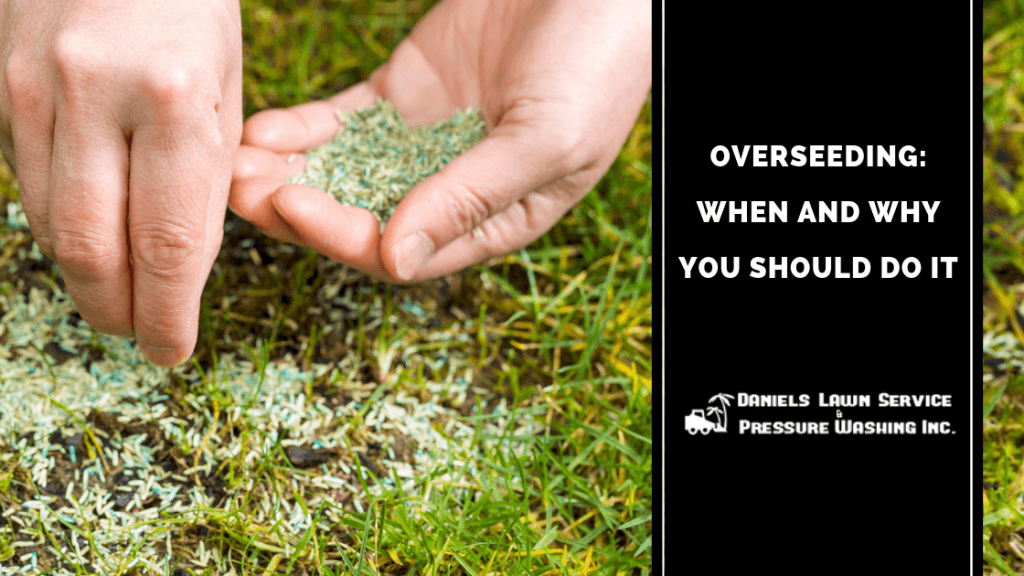
Overseeding is a process where you plant new seeds directly over an existing landscape. When your existing lawn is browning because your variety of lawn grass is out of season, you can plant seeds from a different strain of grass that is in season. The new grass seeds then grow in over the browning patches on your lawn. The point of overseeding a lawn is to make it greener and more vibrant.
How Ryegrass Can Spruce Up Your Lawn
Ryegrass is in season when other common Florida grasses, such as Bermuda grass, are not. Because of this, ryegrass is the perfect grass to overseed your lawn with for the winter. It is known for growing very quickly, which provides near instant relief for a browning lawn as you will see sprouting in 7-10 days. It is also a great choice to plant with a slow-growing new lawn because of these fast growing properties.
A Low Maintenance Growing Process
Ryegrass is a “throw and grow” type of seed, not requiring any additional tilling or shoveling to plant, saving you from disrupting the growing patterns of your lawn. For your ryegrass needs, simply contact a lawn professional to have them seed with a mechanical seeder. In Florida a lawn overseeded with ryegrass may require weekly trimming to keep the lawn properly manicured. Before seeding, your lawn care professional will likely need to mow your lawn down to an inch if you have Bermuda grass, and down to two inches if you have centipede grass. A lawn overseeded with ryegrass will also require some light irrigation with a sprinkler or hose two times daily, for two weeks.
The Experts at Daniel’s Lawn Service of Orlando Can Help!
The lawn experts at Daniel’s Lawn Service can help you with overseeding and all of your winter lawn needs. Our experienced professionals can make your lawn look perfect and green. Sign up for a year of lawn service today and receive 50 percent off your first month of service!
How to Use Black Friday Sales to Spruce Up The Yard
How To Use Black Friday Sales for Your Yard
Why the yard?
The lawn is the entry way to your home. It leaves a lasting first impression for visitors. Your yard is a social gathering space and akin to an outdoor living space. You can lounge, gather and cook in your patio or lanai area. Like any living space you can add onto it continuously with new accessories and features. Black Friday is the perfect time to add on to your lawn, and since we’re in the Fall (will we get a Winter in Orlando this year?!) here are some Fall landscaping tips.
When is Black Friday This Year?
This year in the United States of America Thanksgiving will be celebrated on the 23rd of November. The following day, November 24th, marks the beginning of the holiday shopping season, known as the Black Friday!
This is the best time to shop because huge discounts are offered by the retailers to their clients during Black Friday sales. Also, at some locations the Black Friday sale starts before the 24th, and will continue discounts beyond it. Be on the lookout for great deals. Especially the following Monday, known as Cyber Monday, when internet retailors offer similar discounts.
Although there is no official holiday, on Black Friday, many employers give the day off. Most shop owners and retailers start their day early, and are open late in the night to cater to the needs of their customers. Considered the ultimate shopping bonanza of the year, you can get products and services at discounted prices.
Black Friday Sales for the Yard
This year The Home Depot will be offering special deals daily on their website in the lead up to Black Friday. Check daily for different discounts, including on items such as grills, patio furniture, and more.

Lowes will be opening at 6 am for Black Friday this year and offering items ranging from select grills up to 50 percent off. Outdoor space heaters will be $99 and fire pits will be for sale for $29. Inflatable lawn holiday decorations will be available as well.

Oasis Outdoor Dining Sets from Macy’s, usually priced $39.00 – $4,199.00, will be on sale for $23.00 – $1,849.00. Other outdoor furniture sets will be available as well at discounted prices.
As always, keep your lawn in shape with Daniels Lawn Care!
Daniels Lawn Service is always available to central Florida residents, no matter what time of year. From pressure washing to landscaping, Daniels can keep your outdoor living space in tip top shape.
Daniel’s Lawn Service Takes “Central Florida-First” Approach To Local Lawn Care
For Immediate Release
October 24, 2017-Orlando, FL
Lake Mary lawn care service Daniel’s Lawn Service & Pressure Cleaning is taking a “Central Florida-first” approach to local lawn care, as the year comes to a close.
With the Fall season setting into the Central Florida area, Daniel’s Lawn recently shared tips on how to care for Florida lawns, where there is a low chance of freezing. But, as Central Florida does get cooler weather than South Florida, Daniel’s Lawn does recognize the chance of in climate weather and educates homeowners and businesses on how to prepare for cooler months ahead.

“We at Daniel’s Lawn Service are very proud of our team [in their ability] to provide top service to customers.”, says Brian Rhoden of Daniel’s Lawn Service.
Following Hurricane Irma, Daniel’s Lawn Service raised awareness of proper debris clean up and extended their services where needed. The local lawn care company worked hard on fallen tree removal, landscape design, and lawn service following the storm. Hurricane Irma inflicted serious property damage to a large percentage of the Central Florida area. Daniel’s Lawn Service rose to the challenge of assisting Central Florida homeowners with their lawn related needs.
About Daniel’s Lawn Service and Pressure Washing, Inc.
Daniel’s Lawn Service and Pressure Washing, Inc. is a Lake Mary-based lawn service and pressure washing company. With decades of design and installation experience, Daniel’s Lawn Service serves the greater Orlando area including Lake Mary, Maitland, Casselberry, Longwood and Winter Park.