BLOG
Hurricane Season Is Here! Is Your Yard Ready?
It’s time once again for hurricane season, which began June 1 and will run through November 30. However, whether you’re a new resident of The Sunshine State, or an experienced native or semi-native, you need to pay special attention to your hurricane preparations this year! Even if this won’t be your first hurricane rodeo, complacency could put your property at risk for damage.
La Nina Arrives – Why this Hurricane Season is Forecast to be More Active
This hurricane season marks the beginning of the La Nina cycle. There are technical explanations for this climate cycle – which usually lasts one to three years – but in plain language, a La Nina cycle is marked by more frequent and intense hurricanes. AP science writer Seth Borenstein describes La Nina as follows:
”When meteorologists look at how busy a hurricane season is, two factors matter most: ocean temperatures in the Atlantic where storms spin up and need warm water for fuel, and whether there is a La Nina or El Nino, the natural and periodic cooling or warming of Pacific Ocean waters that changes weather patterns worldwide. A La Nina tends to turbocharge Atlantic storm activity while depressing storminess in the Pacific, and an El Nino does the opposite.
“La Nina usually reduces high-altitude winds that can decapitate hurricanes, and generally during a La Nina there’s more instability or storminess in the atmosphere, which can seed hurricane development. Storms get their energy from hot water. Ocean waters have been record warm for 13 months in a row and a La Nina is forecast to arrive by mid to late summer. The current El Nino is dwindling and is expected to be gone within a month or so.”
With this hurricane season expected to be more unpredictable and active, waiting until a hurricane warning is issued to make plans and take action to prevent – or minimize – damage isn’t advisable. For Florida newcomers, a hurricane warning is issued when hurricane conditions are expected; a hurricane watch means that hurricane conditions are possible.
As we always say, hurricanes aren’t all you need to be concerned about. Tropical storms and Florida’s almost-daily summer afternoon thunderstorms can also pack a destructive wallop! A tropical storm is defined by maximum sustained surface winds ranging from 39-73 mph. A hurricane is defined by maximum sustained surface winds of 74 mph or greater. Not every tropical storm develops into a hurricane, although a tropical storm is given a name when it displays a rotating circulation pattern and wind speeds reach 39 miles per hour. When you hear about a “named storm,” this is what your TV weather person is talking about. Take any named storm seriously!
Prune and Trim Your Trees Now – Remove Dead and Declining Trees
You may not think so, but trees are especially vulnerable in a hurricane. Dead branches can snap off during a storm and crash through windows, as well as fall on houses, cars and people. Dead and unhealthy trees can be uprooted, causing the same types of property damage as fallen branches – but even more extensive. Moreover, fallen branches and trees can bring down overhead utility lines (the main reason for prolonged post-hurricane power outages).
In 2004, Hurricane Charley – which made landfall on August 9 as a category 4 storm (130-156 mph sustained winds) – uprooted an estimated total of 28,000 trees throughout Orlando and Winter Park. Since then, Central Florida communities encourage homeowners to prune old or overhanging branches and remove declining trees to prevent a similar situation.
Cutting down heavy limbs or a tree are not DIY jobs, as most homeowners don’t have the tools, equipment or ability to do so safely. And don’t rely on YouTube videos to educate you. Call a full-service yard service company or arborist to trim or remove trees.
Our blog post – “Being Prepared for Hurricane Season” – offers the following preventive recommendations from the University of Florida, Institute of Food and Agricultural Sciences (IFAS) Extension:
- Prune weak, rotting, or dead tree branches and remove low-hanging ones near the house.
- Check tree roots for signs of rotting and remove any rotten or diseased trees or shrubs.
- Keep the tree canopy maintained and thinned to increase air circulation.
One important preparation step that’s too often overlooked is cleaning roof gutters of leaves, twigs and other debris. Tropical storms and hurricanes produce torrential rains over a prolonged period. Roof gutters and downspouts clogged with debris can’t allow the water to run off. Wendy Wilber of Florida Farm & Family advises checking your yard’s drainage areas to make sure they’re free and clear of debris.
“Water cannot flow well through blocked drainage areas and can flood the yard if it has nowhere else to go. Standing water can cause trees to fall over and kill tree roots, even weeks after the storm.”
Assess Your Patio Furniture and Container Plants – Make a Plan to Move Them
Make plans for patio furniture, other outdoor items and container plants. You don’t want to wait until a hurricane is imminent before deciding where they should be moved to protect them – as well as to prevent them from becoming projectiles that can crash through your windows in high winds! Decide the best place(s) to store your outdoor furniture, grill, garden ornaments and statuary, hanging and potted plants, etc. If you won’t be able to bring potted plants indoors, cluster them next to an exterior wall and tie them together. If you have an outdoor grill, bring the grill indoors, but leave the propane tank outside, chained in an upright position to a solid object or structure.
Some items – such as garden statuary – may be too heavy to pick up, yet could still become a projectile in hurricane-force winds. If an object requires being put on a hand truck or dolly and needs two people to move it, consider locating it to a protected area now. Once a hurricane threatens Central Florida, you’ll be too busy making other preparations – and the help you’ll need to do the lifting may not be available.
Word to the wise: A screen pool enclosure is not a protected area. Considering that a category 1 hurricane packs sustained winds of 74 to 95 mph, a screen enclosure offers little or no protection to anything inside. The screen panels and even frames themselves can be damaged by large, heavy objects – such as patio furniture – thrown against them.
Be Prepared and Stay Safe This Hurricane Season!
While you need to make the proper better-safe-than-sorry preparations every hurricane season, the return of La Nina gives extra reason for ensuring your property is in shape to keep your house and family as safe as possible. Our blog post – “First Hurricane Season in Florida? Here’s What You Need to Know!” – provides additional preparation tips for your yard, garden, patio and pool.
As mentioned earlier, major jobs that involve cutting large branches or tree removal should be left to a professional who has the experience and equipment to do so safely. Daniel’s Lawn Service & Pressure Washing specializes in tree services, lawn care services, landscape design, pressure washing and bush hogging. We are licensed and insured, so you can hire us with confidence for all of your yard maintenance needs! We’re located in Lake Mary, serving Longwood, Sanford, Orlando, and the entire Central Florida area. Contact us to help you prepare for hurricane season, and take one more worry off your plate this year!
Advantages of Landscaping with Florida Native Plants
We at Daniel’s Lawn Service & Pressure Washing often refer to your property as your slice of Central Florida paradise. Incorporating Florida native plants into your landscape can make it even more so! The Sunshine State’s diverse variety of botanical life can enhance every area of your yard, providing several advantages in addition to their considerable beauty.
Florida Native Plants Can Better Tolerate Florida’s Challenging Climate
Recent arrivals acclimating themselves to Florida’s semitropical climate may still be baffled by our ongoing heat, humidity and absence of four well-defined seasons. So just imagine what plants might think – if they could! If you’re from “up north” and want to have a bit of home in your landscaping, those beloved flowers and shrubs may find our environment inhospitable. Florida native plants are equipped to grow and thrive here, requiring little more than basic care.
As our blog post – “Landscaping with Florida Native Plants” – points out, it’s about more than just temperatures that give native plants the winning edge. In addition to being a subtropical climate, the state itself has many unique characteristics when it comes to soil, water and wildlife. The plants we see today have taken many thousands of years to adapt to our specific climate and geography. Because of this, Florida native plants can naturally endure our heavy rainy season, very hot temperatures, periods of drought, humidity, (very) occasional winter freezes, the harsh sun and more.
The Florida Native Plant Society provides the following additional benefits:
- Florida native plants require less water than non-native species, which helps to conserve the state’s water supply – as well as keeping your water bill manageable.
- Most Florida soils are naturally low in nutrients, and the plants that are found naturally in those soils generally need little or no supplemental fertilizer.
- Florida native plants provide food for birds, pollinators and other beneficial insects.
The biggest advantage of all is that they’re simply easy to take care of! You won’t need to put in too much extra work as you would with non-native plants in order to compensate for growing in a non-native environment. Florida native plants allow you to put in less effort and resources at less expense for spectacular results!
There is a Wide Variety of Florida Native Plants to Choose From
Fortunately, you don’t need to feel deprived should you decide to devote much of your property’s landscaping to Florida native plants! Despite the misconception that native plants aren’t all that ornamental based on what’s observed in the wild, reality is very different. Be it groundcovers, annual or perennial flowers, vines, shrubs or trees, you’ll find many choices to make any landscaping vision a stunning reality!
Florida Native Plants Offer Many Landscaping Possibilities
If you wanted, you could plant your entire yard with Florida native plants and create intriguing layers, flower beds and focal points. Of course, you don’t have to go to extremes. They play well with non-native plants, serving as attractive accents.
And for our newcomers, don’t assume that palm trees are the only Florida native trees available! If you’re longing for a bit of home, the lovely Florida maple is ideal for use as an ornamental or shade tree – and even provides beautiful fall colors with leaves turning muted shades of yellow and orange.
A List of Our Favorite Florida Native Plants
There are so many native Florida plants that we simply don’t have the space to give details on every single one. This is good news, however, because it means you have a generous variety of options! We’ve included 11 plants here, but Google and your local nursery will be your best friends when it comes to researching more.
- Beautyberry – Also referred to as the American mulberry, the beautyberry shrub brings lavender-pink flowers in the spring and summer, before bringing forth gorgeous purple fruits in September. They can be planted year-round, preferably in rich soils (but poor and sandy soils are okay, too).
- Black-Eyed Susan – Easy to grow, the black-eyed Susan is a sunny-colored wildflower that’s perfect for butterfly gardens. This plant forms a mound of foliage topped with a bright display of flowers characterized by brown centers surrounded by red, orange, yellow or golden petals. Seeds can be planted directly in the ground, or you can buy small plants. Choose a sunny, well-drained location in the spring. The flowers will develop 10 to 14 weeks after the seed is planted, and should survive throughout the summer.
- Blanket Flower – Resembling a sunflower, the blanket flower comes in vibrant yellow, orange, red and even reddish purple. This summery flower tolerates heat, saltiness and sand with ease. Just be sure to plant blanket flowers in any well-draining soil and in full sunlight for best growth.
- Coontie – A type of shrub-sized cycad, the coontie looks very tropical with its palm-like leaves. They are sturdy against cooler temperatures and tolerant of salty soils. Plant coontie in any well-draining soil and any light environment.
- Coral Honeysuckle – Also known as trumpet honeysuckle, this vine is best known for its bright red, tubular flowers. Clusters of blooms emerge on new growth in spring and summer. The flowers attract hummingbirds and butterflies for months before maturing into berries. These fruits draw songbirds in late summer and fall.
- Firebush – Firebush is a hearty shrub with dazzling orange flowers. Plant it in the late spring or summer in well-drained soil (particularly limestone soil). While firebush does love being in the sunlight, it can also grow well in partial shade.
- Muhly Grass – Great for filling space, muhly grass is famous for its pink, purple and white fluff. Plant this grass in sunny areas and expect them to grow the most in the springtime. Give them two to two and a half feet of space between each planted grass for optimal growth.
- Native Azaleas – This flowering shrub comes in a variety of bright colors. They can flourish in any well-draining soil, and enjoy partial shade. Our blog post – “Dress Up Your Central Florida Landscape with Azaleas” – covers this Florida favorite in greater detail.
- Native Bromeliads – Besides palm trees, no plant says “Florida” quite like native bromeliads. Standouts for their bold, often colorful leaves and for the exotic flower spikes that many produce, bromeliads have a lot to offer if you want to create a landscape with a more tropical look. The main thing to consider when choosing a bromeliad is the amount of light your spot receives. Bromeliads come from a wide range of environments – from areas with deep shade to full sun – so chances are good that you can find one suitable for your site.
- Passion Flower – This flowering perennial vine attracts butterflies and hummingbirds. It produces stunning blooms in shades of purple or lavender – as well as green fruit that’s technically edible but not tasty. Plant at the base of a fence, trellis, or arbor. It performs best in full sun, but can tolerate some shade. Because the vines spread, plant where it has room to roam. The passion flower will grow as high and as wide as the structure it grows along.
- Southern Magnolia – The elegant southern magnolia tree features dark green leaves and big white flowers that bloom in both the spring and summer. It grows well in moist but well-draining soils, and can be planted in any variety of sunlight exposure.
The Take-Home Message
Whether you’re considering a new plant for your yard, or an entirely new landscaping design, Florida native plants can provide great benefits in many ways. Our landscaping experts at Daniel’s Lawn Service & Pressure Washing can advise you on the best types of Florida native plants for your property – and provide a landscaping design that allows you to incorporate and showcase them to give you a yard that will truly be your slice of Central Florida paradise!
In addition to landscaping design, our full-service company provides plant and tree installation, tree trimming, yard maintenance, pressure washing and so much more. Contact us today so we can do the work, and you can do the enjoying! We proudly serve all of Central Florida – including Orlando, Sanford, Longwood and Lake Mary! We look forward to helping you achieve your goals and bring your vision to life!
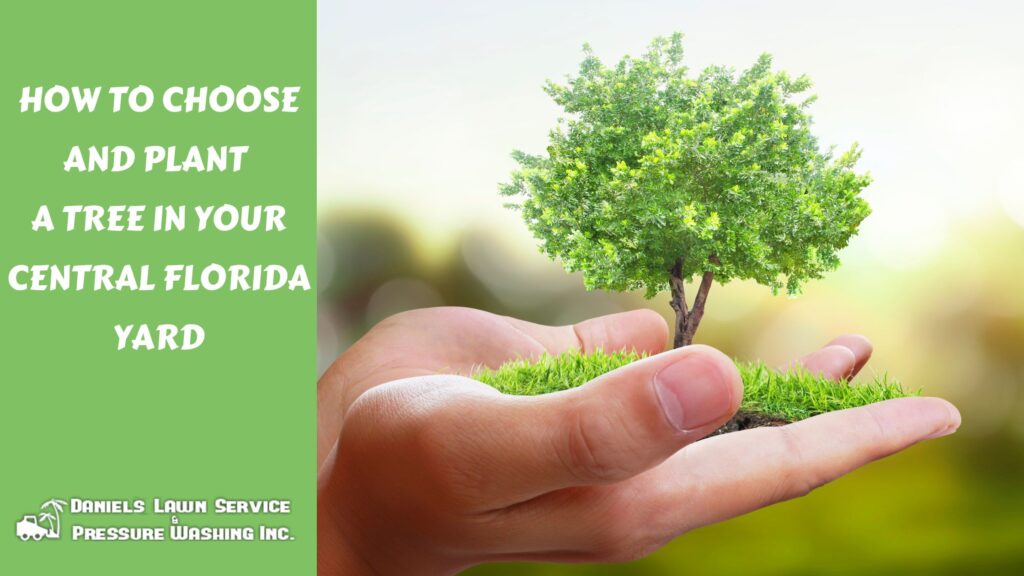
How to Choose and Plant a Tree in Your Central Florida Yard
Arbor Day is observed on the last Friday of April every year. The purpose of this celebration is to raise awareness about the importance of trees to our environment – from preventing soil erosion to producing oxygen. The result of this awareness, hopefully, is to inspire homeowners to plant a tree on their own property – or make a donation to purchase trees for the grounds of a non-profit organization’s common areas.
But you don’t need to wait for Arbor Day to enhance your Central Florida yard with a tree – or two – or more. Thanks to our subtropical climate, there are tree species that can be planted throughout the year! Now that you’re thinking about it, here’s what you need to know about choosing and planting a tree.
The Benefits of Planting a Tree in Your Yard
The beauty that trees add to your house immediately comes to mind as a good reason for planting them. Moreover, trees can increase property value by as much as 15 percent. The good people at Warner Tree Service provide the following additional benefits of adding a tree to your Central Florida yard:
Erosion – In a state prone to flash floods, storm surges and other weather-related disasters, tree coverage plays a crucial role in preventing soil erosion and flooding.
Heat – Shade trees help to keep homes cool during the summer. The dense foliage cast by mature trees creates a “canopy” that shields the ground from direct sunlight. As a result, the air temperature is cooler, allowing us to enjoy more outdoor activities during the summer months.
Air pollution – The dense foliage cast by mature trees also traps dust and other air pollutants inside the canopy, helping to reduce air pollution and creating a healthier environment to breathe.
Wildlife – Florida trees are a fantastic habitat for many different animals and wildlife.
Factors to Consider when Choosing a Tree – Plus Some Suggestions on Trees to Choose From
In your enthusiasm to plant a tree, don’t make the mistake of rushing out to the home improvement store’s gardening center or local nursery to buy the first sapling that catches your fancy. You may have an idea of where you want a tree, but study your property and do research on the tree species you’re considering. When it comes to trees, the trial-and-error method that you might be used to applying to shrubs and flowers doesn’t work as well. By the time you realize it’s in the wrong spot, the tree will be too difficult – and probably expensive – to transplant to a better location in your yard, or remove entirely.
University of Florida IFAS Gardening Solutions provides this helpful guide to factors to consider when choosing a tree:
Choose high-quality trees with good structure – Like any good investment, spending a little extra cash up front on a tree of superior quality will likely pay off in the long run.
Think ahead – Don’t plant trees that grow large beneath power lines, close to your house, or in other potentially hazardous sites. If your home features solar panels, be sure any trees you plant will not block them.
Give trees adequate rooting space, with no obstructions – Sturdy trees have straight main roots. Curbs, foundations, and sidewalks all act as barriers to roots, making them turn and twist. A tree with twisted roots will not be as stable as one with strong, straight roots.
If you can, plant trees in groups – Trees planted in groups are much better protected in high winds. In addition, trees planted in combination with appropriate shrubs and groundcovers form effective windbreaks and wildlife habitat.
Placement matters – Position trees and shrubs strategically to naturally cool or heat your home. Plant deciduous shade trees on the south, east, and west sides of a house to cast shade in summer and allow warming in winter. Tree shade can reduce air conditioning costs significantly – an air-conditioning system’s outdoor compressor/condenser unit uses less energy when it is shaded from direct sun during the day. Just be careful not to block the unit’s airflow with low branches.
So what kind of tree should you consider to grace your yard? If you want relatively easy maintenance and maximum resiliency to Florida’s demanding climate, look at native Florida trees – particularly those that are better able to withstand hurricanes.
University of Florida IFAS Gardening Solutions has the following recommendations for native Florida trees that can be a great addition to your property. Click this link to read the entire article for the complete list of trees.
“Florida has several attractive, hardy species of differing sizes. From small trees like redbuds to the majestic live oak, there’s a Florida native tree for practically any home landscape.
“If you’re looking for small trees, consider the redbud. In Central and North Florida, it puts on an amazing show each spring with a beautiful display of pink flowers. The medium-to-large red maple ushers in spring with red flowers and winged seeds.
“As far as large trees go, the bald cypress will do well near water or on drier land throughout the state. The live oak is a majestic native that can also be planted statewide.
“Even if a tree is native, make sure you know its soil, light, and other requirements, to ensure its success in your landscape.”
As for hurricane-resistant trees, research conducted by University of Florida scientists showed that sand live oaks are the most resistant to wind damage. Other good choices include the Southern magnolia, live oak, crape myrtle, bald cypress and sabal palm. These trees are less likely to lose limbs or blow over during hurricanes. Some of the trees with the least wind resistance were sand pine, Chinese elm, water oak, and laurel oak.
You may have noticed that we haven’t yet mentioned our beloved palm trees. Although botanically speaking they’re not really trees (in fact, they are monocots), their flexible trunks bend rather than break in high-speed winds, making palms very good at surviving hurricanes and tropical storms. Our blog post – “Palm Tree Care and Feeding” – covers more about Florida’s iconic tree in greater detail.
Want the Experience of Planting a Tree Yourself? Here’s How to Do It!
Some people want the hands-on experience of digging a hole, planting their tree, filling the hole back and giving the tree its first drink of water on their land. For the tree to successfully establish itself, grow and thrive, this process must be done correctly.
Before digging, however, make sure the tree’s location is away from underground pipes and your septic tank, if applicable. Also ensure that it’s well away from underground utility lines.
University of Florida IFAS Gardening Solutions provides the following instructions:
Look up – Find a new planting site if there is a wire, security light, or building nearby that could interfere with the tree as it grows.
Dig a wide, shallow hole – Dig a hole that is one and one-half to three times the width of the root ball (the roots and soil attached to the plant when you remove it from its pot). You can also dig a hole that is only slightly larger than the root ball and simply loosen the soil around it with a shovel.
Find the point where the uppermost root emerges from the trunk – This point is called the trunk flare, root flare, or root crown and should be even with or slightly above the soil surface. Remove any roots that circle close to the trunk.
Slide the tree into the planting hole and position it carefully – Place the trunk flare slightly above the surface of the landscape soil and begin to fill the hole with the excavated soil, making sure the tree is straight as you go. As you add the soil, slice a shovel down into it twenty to thirty times, all around the tree. Compress the soil with your foot to stabilize the tree.
Shave off the outer inch or so of the root ball with a sharp shovel – This removes roots that could strangle the trunk later as it grows in diameter. It also encourages roots to quickly grow into the landscape soil and makes the tree sturdier in winds.
Add plenty of water to the root ball and planting hole – Make sure the root ball and surrounding soil are thoroughly moistened. Add more soil around the root ball if needed.
Cover the backfill soil with mulch – Apply mulch to a minimum 8-foot diameter circle 3 inches deep around the tree, with a gap of 12 inches between the trunk and the mulch.
Stake the tree, if necessary – Staking holds the root ball firmly in the soil. Top-heavy trees might require staking, especially if they’re located in a windy location. Stakes should be removed within one year of planting.
Water trees frequently so roots fully establish – Light, frequent irrigation fosters the quickest establishment for trees. Following the initial few months of frequent irrigation, water weekly until the tree is fully established.
The Take-Home Message
As you’ve learned, choosing the right tree or trees requires a good deal of research and landscape design sense. And you may not be inclined to plant it – or them. Why not call us? Daniel’s Lawn Service & Pressure Washing does it all! We’ll come to your house, walk around your yard with you, and recommend the best tree(s) for your property, and how to incorporate them into your landscape to provide optimum function and curb appeal.
Tell us your ideas! Do you want a backyard for entertaining or recreation? Our landscaping experts can suggest the perfect trees that fit in with your plans! Are you looking for shade trees, or trees that can help reduce the heat your house absorbs? Or trees that create a tropical vibe? The tree – and yard – of your dreams is just a phone call away!
Our full-service company provides landscape design, tree installation, tree trimming, yard maintenance, pressure washing and so much more. Contact us today so we can do the work, and you can do the enjoying! We proudly serve all of Central Florida – including Orlando, Sanford, Longwood and Lake Mary! We look forward to helping you achieve your goals and bring your vision to life!
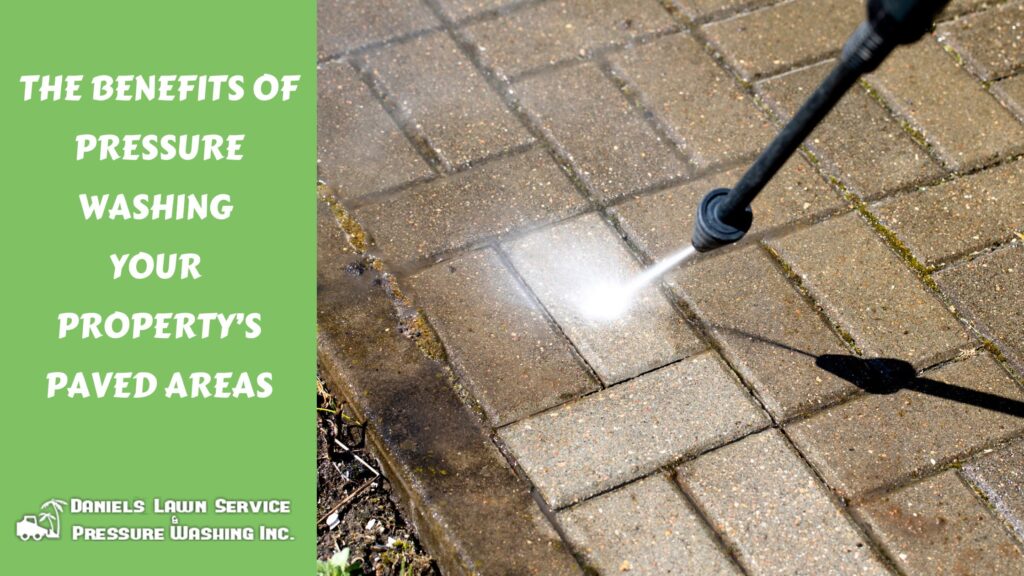
The Benefits of Pressure Washing Your Property’s Paved Areas
When you think about what makes the outdoor areas of a home attractive, you picture a well-maintained house, manicured front lawn and tasteful landscaping that complements the property. A spotless driveway, carport, walkways and patio slab and/or deck may not immediately spring to mind, but they contribute to creating a great overall first impression, as well. In fact, if it’s your house, clean paved areas go a long way in making the time you, your family and your friends spend outdoors an even better experience. And if you’re planning to put your house on the market, making sure these areas are at their best could possibly help it sell faster – maybe at a higher price!
While most people are familiar with the idea of pressure washing, it basically uses high-pressure water jets to clean surfaces – removing dirt, grime, algae and other residue. It does a much faster, more thorough job of cleaning than using soap and water, being able to dislodge gunk embedded deep in the pores and crevices of concrete and brick.
Pressure washing your property’s paved areas provides several benefits. In Central Florida, spring and mid-fall are the optimum times to perform this task, as temperatures are mild and hurricane season has yet to start, or is past its peak months of August through October.
Improves Curb Appeal and Enjoyment of Your Home’s Outdoor Areas
As mentioned earlier, clean paved areas play an important part in making your home’s exterior appear well-maintained. For example, a driveway with oil stains and accumulated dirt and gunk doesn’t create a positive impression – nor does a walkway to your front door that sports a combination of black grime and green algae. Having clean paved areas shows pride of ownership and elevates the appearance of the neighborhood. A neighborhood where every house is well-maintained is a more desirable place to live, which ultimately results in higher property values.
But pressure washing shouldn’t be only about what the neighbors will think, or what your house can sell for. Your home’s backyard is where you relax and entertain – therefore, your patio, deck, pool deck, outdoor kitchen and pathways need to be clean and welcoming. If your yard is your personal retreat – or as we at Daniel’s Lawn Service & Pressure Washing call it, your slice of Central Florida paradise – it should provide as much of a resort-like experience as possible. When was the last time you visited a grungy-looking resort? If you ever have, it isn’t likely you’ll ever return!
And speaking of resale value, homebuyers could feel they’re being catfished if the front of your property is pristine, but the back area could use a good cleaning. Moreover, homebuyers assume a home that appears to be well-cared for is also in excellent repair and has no unpleasant surprises awaiting the next owner. Pressure washing is a great way to keep your home’s “halo effect” intact!
Improves Health and Safety
Not only does pressure washing keep your property looking good, it also improves health and safety. Central Florida’s humid semi-tropical climate encourages the growth of algae, mold and mildew. Removing these contaminants from hardscapes creates a healthier outdoor environment for people and pets. In addition, surfaces covered by algae, oil and other types of grime tend to be slick (especially after rain), posing a slip-and-fall hazard.
Pressure washing not only improves the safety of your property, it maintains the integrity of your hardscape surfaces. The afore-mentioned harmful growths can gradually eat away at them, resulting in safety hazards and costly repairs down the road. As CLP Property Management points out, exposure to debris, dirt and stains affects the surfaces of paved areas, and can cause permanent damage. Regular cleaning is crucial to maintain the surface’s condition to prevent premature deterioration.
Other benefits of pressure washing your paved areas – especially your driveway – include:
- Limiting weed growth.
- Eliminating stains.
- Saving the time and exertion of manually scrubbing.
Why You Should Leave Pressure Washing to the Pros
Pressure washing is one of those jobs that many people think they can tackle. Every spring, some store or another promotes a portable pressure washer that looks user-friendly enough for someone with no experience in pressure washing to handle. However, entry-level pressure washers for the consumer market typically don’t produce enough pressure to adequately clean. One disgruntled buyer of such a model wrote an online review describing it as an “Overpriced waterhose.”
Pressure washer power is measured in cleaning units, gallons per minute and psi. GPM is the water flow rate measured in gallons per square inch while psi is water pressure measured in pounds per square inch. Cleaning units are calculated by multiplying GPM x psi. Both psi and GPM are equally important. Small, low-psi units seldom have the power to blast away deeply embedded dirt and grime.
However, more powerful units can be too much for a homeowner to safely operate. Even if you’re young – or youngish – strong and healthy, using a pressure washer properly requires as much brain as brawn. Keep in mind that taking the DIY route can be hazardous if you aren’t familiar with how to work a pressure washer. Dangers include using too much pressure or the wrong nozzle – which can damage surfaces, break windows if you aim the nozzle in the wrong direction and even cause injury. Of course, having the proper protective clothing is also essential in preventing injury.
Also, consider the time factor. Preparing the area to be cleaned, setting up the equipment, doing the work, taking the equipment apart, cleaning it and storing it can take the better part of a day, at least. Factor in additional time if you’re renting the equipment.
If doing it yourself seems attractive because you think you’ll save money, performing this task could well be a case of false economy. Leaving any kind of pressure washing project to a professional will be well worth the investment in a job expertly and safely done. And it may not even cost as much as you think! Our blog post – “Turn Up Your Spring Cleaning With Pressure Washing” – provides more information, advice and tips.
A professional pressure washing service provides the following advantages over taking the DIY approach:
- Pros use specialty surfactants that soak into all the pits and pores of hardscape surfaces to dissolve the most hardened, thickest dirt and grime.
- Pros can recognize stains on concrete and patio pavers – including motor oil, rust, and paint droplets – and apply specialty detergents, then scrub the area as needed.
- Pros can recommend and apply soft wash systems for cleaning a concrete pool deck. Soft wash systems start with a surfactant that dissolves thick dirt and sand. A low-pressure rinse removes all that residue without damaging concrete paint or sealant or cracking and chipping pavers and stone tiles.
- Pros ensure that all dirt and grime are brushed and cleaned away from your home and lawn properly to avoid damage and an unsightly mess.
The Take-Home Message
Pressure washing your property’s paved areas requires knowledge, experience and the right tools to ensure the best result. Our pressure washing team at Daniel’s Lawn Service & Pressure Washing does all the work so you can relax and enjoy your slice of Central Florida paradise in a clean, pristine condition you’ll be proud of! Or increase its competitive edge in the real estate market if you put it up for sale!
By the way, our full-service company also provides landscape design, tree installation, tree trimming, yard maintenance, bush hogging and so much more. Contact us today! We proudly serve all of Central Florida – including Orlando, Sanford, Longwood and Lake Mary! We look forward to helping you achieve your goals and bring your vision to life!
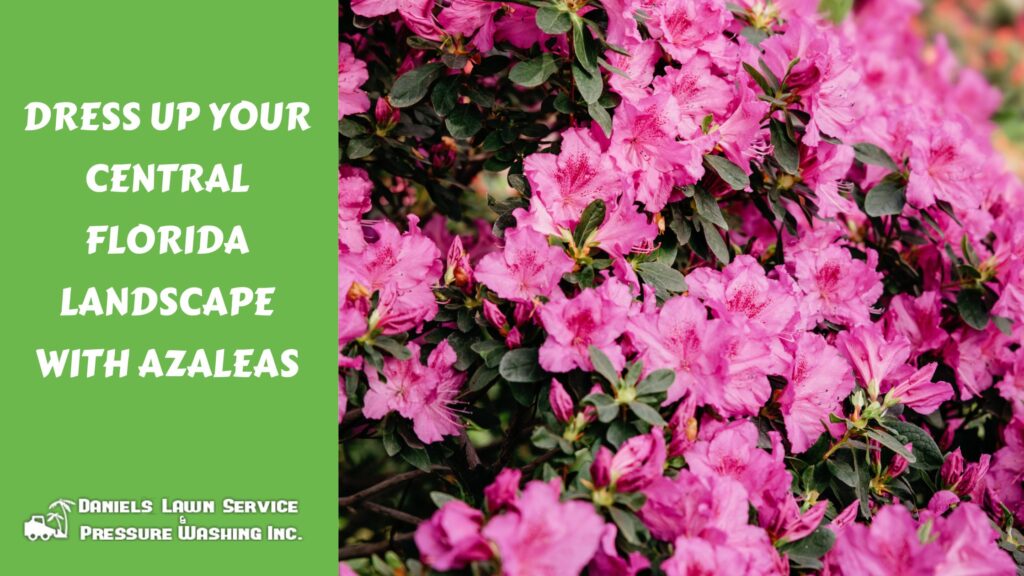
Dress Up Your Central Florida Landscape with Azaleas
Bright, breathtaking azalea shrubs in bloom are a welcome sign of spring in Central Florida! Although we fortunately don’t have winter gloom to dispel, there’s something special about the azalea’s showy flowers that lift the spirits and makes us extra glad to live here this time of year! Florida azaleas bloom from late February to early April, depending on cultivar and seasonal variation.
If you’re admiring the azaleas in your neighbors’ yards and notice that your landscape is lacking this personality-plus plant, here’s how you can add an azalea or two – or more – to enhance the premises. Once you become more familiar with the versatility they offer, you’ll likely find even more locations for azalea shrubs around your property!
Azalea Cultivars and Where to Plant Them
We’ll start with a few basics about azaleas. All types are perennial flowering shrubs that will last for many years with proper care. They are a subspecies of the rhododendron family, numbering over 8,000 different types! University of Florida IFAS Gardening Solutions lists a few of the most popular.
Evergreen azaleas – These azaleas hold their leaves year-round, making them ideal backdrop plants for seasonal flower beds. And of course in the spring, they put on their own spectacular show with flowers ranging in color from white, to pink, to red, depending on the cultivar. Evergreen azaleas have many other uses in the landscape, including borders, hedges and around trees.
One popular evergreen cultivar is ‘George Lindley Tabor’, a variety that produces countless soft pink flowers each spring and grows to about 10 feet tall and 8 feet wide. Its profuse blooms are so plentiful and large that they completely hide the foliage – and its wide spread produces an impressive effect when used in mass plantings. ‘George Tabor’ is classified as a Southern Indica hybrid, a type favored by gardeners for its vigor and tolerance of colder temperatures without experiencing serious damage.
Other favorite Southern Indica hybrids include ‘Brilliant’ (carmine red flowers), ‘Formosa’ (brilliant rose purple flowers), and ‘Mrs. G. G. Gerbing’ (white flowers). The ‘Little John’ cultivar is also popular, due to its unique burgundy foliage and deep red flowers.
Satsuki hybrids are mid-sized azaleas, typically growing about 5 or 6 feet high within 10 or 15 years. They come in a range of colors from white to pink, yellowish pink, red, reddish orange and purple, often with patterning on the petals. Popular cultivars include ‘Flame Creeper’ (orange-red flowers) and ‘Gumpo’ (white or pink flowers).
For smaller-scale plantings, Kurume hybrids can be a good choice, since they grow from 3 to 5 feet tall depending on the variety. Kurume hybrids produce pink, red, purple or white flowers that are smaller in size than those of the Southern Indica hybrids but no less plentiful.
True dwarf varieties are also available, including the charming ‘Red Ruffle’ cultivar, which grows 2 to 3 feet tall.
Native azaleas – Actually, most of the evergreen azaleas growing in Florida home landscapes are hybrids, and originally came from Asia. Native azaleas are also known as bush honeysuckle. They have smaller flowers and a more delicate appearance, but are very fragrant – whereas non-natives have no fragrance.
Native azaleas bloom around the same time as other azaleas, with colors just as stunning, ranging from pink to peach to yellow. Many new cultivars are being developed with flowers that bloom at specific times.
The native azalea will slowly grow up to 10 feet tall and will lose its leaves in the winter. Natives like the Florida flame azalea (R. austrinum) are increasingly popular. It produces flowers that can range in color from white or pale yellow to orange-red flowers. It will grow up to 8 or 10 feet tall and spreads out more loosely than many of the commonly grown non-native cultivars.
Another deciduous azalea that is native to Florida (R. canescens) goes by a number of common names including pink pinxter azalea, Piedmont azalea, and bush honeysuckle. This shrub can grow between 6 and 15 feet tall and produces fragrant, showy pink flowers in early spring, typically when the leaves first appear.
Although it may seem that azaleas are everywhere, there are optimum places to plant them. Their shallow root system and low tolerance to poor soil drainage make placement and care important. They perform best in areas with filtered sunlight. Partial shade under pine trees or strategically spaced hardwoods provides conditions for healthy growth and optimum flowering; dense shade reduces both. However, different types of azaleas can handle more sun than others. Check the plant tag when buying to learn what’s recommended for each variety.
Azalea Care and Feeding
Fortunately, azaleas aren’t high-maintenance plants, but they do have some requirements if you want them to achieve maximum fullness and blooms. According to University of Florida IFAS Extension, well-drained, organic soils with a pH of 4.5 to 5.5 are best suited for azaleas.
“Organic amendments and fertilization are usually needed to modify Florida soils for proper azalea growth. Fertilizers, organic amendments, and pH-adjusting amendments should be incorporated into the planting bed or soil backfill during planting.
“Preparation of the entire planting area is best when a number of azaleas are being transplanted together. Organic amendments–such as peat, compost, or pine bark – help increase water and nutrient retention and lower the soil pH. A soil test will determine the pH of your existing soil and provide a basis for fertilizer recommendations.
“Ample quantities of iron and other micronutrients may not be available in soils with a pH higher than 5.5. You can modify soils with a pH higher than 5.0 using applications of elemental sulfur. Excessive rates will injure plant roots, so apply no more than 1 pound of sulfur per 100 square feet of planting at one time, and apply sulfur no more than two or three times a year. Dolomitic lime should be incorporated to raise the pH of soils with a pH lower than 4.5. Soil adjustment should be made based on a recent soil test.”
Generally, established plants should be watered every 10 to 14 days during dry periods to wet the soil to a depth of 14 to 18 inches.
As for pruning, always prune in late spring or early summer, shortly after flowering, because azaleas set their flower buds for next year during the summer. Prune too late and chances increase that you will remove flower buds. Several light prunings early in the growing season will help your azalea develop the nicest form. Remove shaded-out branches first, since these often become dead wood. Older plants may have tall leggy branches that need to be removed. Doing so gradually over several years reduces shock to the plant.
Mulching can add a nice touch to your azalea shrubs – as well as other shrubs, flower beds and around trees. Moreover – as do all ornamental plants – azaleas benefit from mulching, which keeps the soil moist and cool while discouraging weeds. Add 2 to 3 inches of organic mulch. Pine straw is recommended in Florida, because azaleas prefer more acidity than most general landscape plants.
Azalea Insect Pests and Diseases
As hardy as azalea shrubs appear to be, unfortunately, they’re still susceptible to insect pests and diseases. University of Florida IFAS Extension provides the following list of insect culprits.
Lace Bugs – These are sucking insects found on the underside of the leaf. The top surface of the injured leaf appears speckled or mottled. Two applications of recommended insecticides at 10-day intervals sprayed on the lower surface of the leaf effectively controls lace bugs.
Leafminers and leafrollers – These pests feed on azalea leaves during their larval stage. Two applications of a recommended insecticide at seven- to 10-day intervals will control leafminers. Leafrollers can be controlled by two applications of a labeled insecticide at 14-day intervals.
Spider mites – Spider mite injury appears as a bronzing or rusty coloration of green leaves. A mite infection can be verified by placing a white piece of paper beneath the foliage and slapping the leaves with your hand. Mites can be detected on the white paper as moving, small red or brown specks. Two applications of a recommended miticide at five- to seven-day intervals will provide acceptable control.
Scale insects – Several species of scale insects can be found on azaleas. Some have a white cottony appearance; others are covered with a hard shell. Scales suck the sap from azaleas, resulting in yellow or unthrifty leaves. Two foliar applications of a recommended insecticide at two-week intervals applied during early stages of scale development provide adequate control.
Stem borers – In the larvae stage, they tunnel into stem and branch tips during late spring and early summer. The young stem will wilt and die back to where the tunnel ends. The best way to control stem borers is to remove infested branches and then apply a properly labeled insecticide. Fungicide and insecticide recommendations are available through your county Extension office.
Common diseases affecting azalea shrubs include the following:
Petal blight – This fungus is most severe during cool, moist weather. Infection first appears as small, white spots on colored petals or rust-colored spots on white flowered varieties. Spots enlarge rapidly into irregular blotches under moist conditions, causing the blossoms to “melt” into a slimy mass.
Affected blossoms dry and may remain or drop from the plants. The fungus survives in dried blossoms on or in the soil. Removing and burning surface mulch and dead flowers three to four weeks before bloom will reduce disease incidence. Directed ground sprays of a recommended fungicide one month before bloom will provide some control.
Leaf gall – This condition occurs during wet spring months and is most severe on densely shaded plantings with poor air circulation. Galls may occur on the leaves, stem, or flowers. Small numbers of galls can be handpicked and destroyed at first appearance. Large plantings should be protected by fungicide sprays starting at budbreak and continuing every 10 days as needed.
The Take-Home Message
Instead of envying your neighbors this year, adding azaleas to your Central Florida landscape will pay off beautifully in dramatic bursts of color and a functional definition of space when used as a hedge, border, or a backdrop for bedding plants. And if you’re fortunate enough to already have azalea shrubs in your yard, you’ve hopefully learned a few tips for improving their care! You may even decide to plant some more!
However, if you’re not the green thumb type but still want your property to be a source of pride and the neighborhood jewel, call Daniel’s Lawn Care & Pressure Washing to design, plant and even maintain the yard of your dreams!
Our full-service company provides landscape design, tree installation, tree trimming, yard maintenance, pressure washing and so much more. Contact us today so we can do the work, and you can do the enjoying! We proudly serve all of Central Florida – including Orlando, Sanford, Longwood and Lake Mary! We look forward to helping you achieve your goals and bring your vision to life!
Pruning Your Trees and Shrubs in Winter
Wintertime is prime time for pruning your trees and shrubs! With Central Florida thankfully spared snow, ice and arctic temperatures, getting out in the yard isn’t a daunting effort. But why is this season ideal for pruning? For plants that shed their leaves in autumn, the branches are bare – making it easier to see where the work needs to be done – as well as easier to access! In addition, non-evergreen trees and shrubs are dormant, which means they have ample time to recover and grow to greater fullness come spring.
According to Tree Service Express, another plus is that winter’s lower temperatures and dry weather decrease the risk of tree infection and disease – which is typically caused or spread by bacteria, fungi, parasites and insects. This is because newly cut branch limbs create a ‘wound’ on the tree. When temperatures are lower, trees are at much less risk for disease when compared to the risk during hot and humid weather.
Now that you know why you should prune now, here’s what you need to know in order to achieve the best results for healthy, thriving trees and shrubs!
Pruning Hardwood Trees
In fact, hardwood trees and woody evergreen shrubs can be trimmed any time of year, as long as they’re not under severe stress – such as drought. The advantages of pruning in winter is that it’s well before the start of hurricane season (June 1 through November 30), and you can get a clear look at the health and stability of limbs and branches.
Clumps of parasitic mistletoe also are more readily visible and accessible to remove. In order to do so, University of Florida IFAS recommends cutting at least six inches down from where the plant is anchored to remove the roots. In trees where the mistletoe cannot be safely reached, a tree professional should be hired to spot spray an herbicide while the tree is dormant, usually December – early February. Mistletoe is very toxic to children and pets, so wear single-use gloves to pick up and properly dispose of any that falls out of the tree. Once dead or diseased branches are removed, prune out any minor branches that are crisscrossed, rubbing against another, or out of place – being sure to avoid cutting flush to the trunk so the swollen collar is left to heal.
Although you may consider yourself a hale and hearty homeowner who’s up to any landscape maintenance task, we strongly recommend hiring a professional for pruning branches that you can’t readily cut from a standing position on the ground.
Pruning Deciduous Trees – Don’t Commit Crape Murder!
For deciduous trees, it’s best to prune while the tree is dormant and has lost all of its leaves (usually in January or early February). University of Florida IFAS advises against pruning too early before the tree has gone into complete dormancy since doing so can stunt the tree and cause severe damage to any new growth during a hard freeze. While infrequent, Central Florida does experience them! Also avoid pruning too late in the spring when the tree is trying to flush out.
The lovely crape myrtle is a popular deciduous tree that graces numerous Central Florida landscapes with its delicate flowering branches. However, too many homeowners commit the crime of “crape murder” – the practice of severely pruning or topping crape myrtles in the mistaken belief it will promote fuller blooms in spring. Not only is it unnecessary, it’s detrimental to the health of the tree. This aggressive pruning method removes strong, viable limbs and encourages the growth of weak shoots that often aren’t strong enough to support the blooms. The cuts made at pruning sites also makes the tree more vulnerable to disease entering and taking hold.
According to Southern Living, the proper way to prune a crape myrtle is as follows:
“Prune only selectively in late winter to clean up random shoots or open up the canopy a bit. Late winter is the best time to do this type of pruning before the trees leaf up so you can really see those random shoots. It’s also fine to cut back any crossed or dead branches and to trim side branches from the trunk so the growth is higher.”
Pruning Woody Shrubs
Minimal pruning is typically recommended for woody shrubs. University of Florida IFAS notes that sudden severe pruning to such shrubs and bushes should be avoided. “If a shrub is blocking views or access, gradually prune it down to the desired height.”
If you plan to add woody shrubs to your yard, be sure to take care in selecting the right plant for the intended place so that its mature size doesn’t become a problem in the future.
The Advantages of Removing Trees in Winter
All of the afore-mentioned advantages of pruning trees in the winter apply to removing them, as well. Without foliage, you can better see the structure of the tree, which may reveal evidence of disease or rot. If you suspect the tree is diseased or otherwise unsound, calling a professional to examine and diagnose it during this time of year will make removing it easier, should this be necessary.
In Central Florida, dead or declining trees pose a special risk during hurricane season. As our blog post – “Why You Should Remove a Dead Tree From Your Property” – points out, trees that are dead or diseased to the point of instability can be uprooted by heavy winds and topple over onto roofs, vehicles, etc. Brittle dead branches can snap off and do likewise, and may become projectiles, crashing through windows and screen enclosures. In addition, if you have a tree on your property that you know is dead, many insurance policies won’t cover damage to your home or car if the tree falls during a storm.
Hurricanes aside, a tree may rot from the inside out, making it much more unstable than it might look. As American Cutters states, “Internal wood decay lessens or eliminates wood’s natural strength and flexibility by destroying its lignin (the strong fibers in wood). Without lignin, the wood becomes weak and can break unpredictably.”
In such a case, the tree itself or a branch could fall spontaneously, causing serious property damage, injury, or worse – and you could be liable for damages to a neighbor’s property or personal injury.
Understand that when we talk about tree removal, we’re not recommending you play lumberjack and cut it down yourself – or with the assistance of another non-professional. This is not a DIY job. Most homeowners lack the equipment, personal protective clothing and gear to safely do this – not to mention the physical ability. Even if you’re strong and sturdy, however, cutting down a tree requires more than brawn. You need to correctly determine the direction in which the tree will fall – as well as take other measures to ensure the job is done without causing injury or property damage. The money you think you’ll save by doing it yourself ultimately isn’t worth the risk.
Whether you need tree removal or tree pruning, our experienced professionals at Daniel’s Lawn Service & Pressure Washing have you covered! Our full-service company is completely licensed and insured, and also provides landscape design, tree installation, yard maintenance, bush hogging, pressure washing and so much more. Contact us today so we can do the work, and you can do the enjoying! We proudly serve all of Central Florida – including Orlando, Sanford, Longwood and Lake Mary! We look forward to helping you achieve your goals and bring your vision to life!
Great Evergreen Shrubs for Central Florida Yards
Even though Central Florida is spared harsh winters that cause foliage to drop leaves or turn brown, some plants still aren’t at their beautiful best during this season. Fortunately, there are many shrubs that provide abundant greenery – and even colorful blooms – to cheer and brighten your yard even without holiday decorations! The best part is they’ll keep their good looks throughout the year. Here are some of our favorites that can be an asset to any landscape!
Seven Shrubs That Will Look Terrific All Year Long
There are so many Florida-friendly evergreen shrubs that can complement your property, it’s a challenge to narrow them down to a specific number. But we tried. The following recommendations are provided courtesy of University of Florida IFAS Gardening Solutions and Warner Tree Service. If you’d like to explore more possibilities, our blog post – “Great Perennials for Your Central Florida Landscape” – provides additional suggestions.
Azalea – Although azalea shrubs attract the most attention in spring – when they burst into bloom with showy red, pink or white flowers – they remain thick, green and leafy all 12 months of the year. The versatile azalea makes an ideal backdrop for seasonal flower beds, as well as used for borders, hedges and around trees. There are several azalea cultivars, so find the one – or ones – that will look the best and be the most compatible with soil and sunlight conditions on your property. Be advised that its pollen can trigger allergies, so consider this if you’re thinking about adding an azalea or two – or more – to your landscape!
Camellia – When this lovely shrub isn’t producing elegant blooms during fall and winter (depending upon the cultivar), its evergreen foliage, interesting shapes and textures, and relatively slow growth make camellias excellent landscape plants. Camellias can serve several functions in the landscape – including foundation plantings, screens, accent plants, background groupings and hedges. Maximum benefit can be achieved by mass plantings or groupings. Plant in a sheltered location with partial shade to help them achieve optimum growth and blooms. Prune before late summer.
Crepe Jasmine – This intriguing evergreen shrub is moderately dense and rounded, blooming in spiraling white flowers that are particularly prominent in the warmer months – although they stand out against the dark green, glossy leaves in any season. Crepe jasmine grows in full sun to shade, but looks best when grown in filtered shade. This plant is ideal for creating a shrubbery border. It also looks good as a specimen plant, and its rounded form makes it an excellent foundation planting against a windowless wall.
Croton – Known for their bold, tropical foliage, crotons are perennial evergreen shrubs and a favorite in Central Florida yards. They’re available in a wide variety of leaf shapes and colors that include reds, oranges, yellows, pinks, purple, greens, and white. Most cultivars grow best in full sun, while others prefer light/partial shade. Crotons thrive in warm, humid weather and should be watered frequently, but not excessively. Plants should be located two to three feet apart.
Dwarf Holly – You may associate hollies with the holidays, but the dwarf holly shrub can be a terrific addition to your landscape that proves its worth all year long! Dwarf hollies are found throughout Florida and they are dioecious – meaning the female and male plants are separate. If you want berries, opt for female shrubs. With red berries and glossy green foliage, Burfordii Nana grows well in Central Florida. This dense, compact shrub grows up to a spread and height of 5–8 feet. ‘Carissa’ and ‘Rotunda’ are two holly cultivars that will take up limited space in your yard. These shrubs can tolerate an extensive range of soil and light conditions. They need minimal pruning and occasional shaping. Another advantage: they’re wind-resistant and can stand up to a hurricane!
Ixora – This low-maintenance evergreen shrub truly delivers the biggest bang for your gardening buck! A compact, densely-branching shrub, ixora is ideal for planting as a hedge, border, screen, or featured specimen – depending on which variety you choose. It blooms year-‘round, producing clusters of four-petaled flowers in such colors as orange, bright red, pink, yellow and white. While full sun is necessary for maximum flower production, this plant – especially large-leaved varieties – can be grown in partial shade. Ixora can be pruned any time and will handle shearing, but be aware that pruning will reduce your plant’s flowering.
Thryallis – If you’re looking for a low-maintenance, reliable shrub with a superb floral display, thryallis is the plant for you! Also commonly known as “rain-of-gold” due to its yellow flower clusters, berry-like fruits continue to add texture through the fall and winter after the blooms fade. It reaches a mature size of 4-6 feet wide and 5-9 feet high. You can allow it to maintain its mounding shape, train it into a small, multi-trunked tree or prune it into a loose hedge. Thryallis grows best in full sun, and looks particularly impressive combined with other flowering shrubs.
Think Before You Plant
The location, planting technique and initial care for a shrub will affect its growth and long-term health. University of Florida IFAS Gardening Solutions provides the following advice.
Choose the right shrub for your site – The young shrub that caught your eye at the home improvement center or plant nursery could wind up being more than you bargained for! Consider its mature size. Many of the plants that are labeled “large shrubs” are also considered “small trees.” Research the mature size of your species before you plant it, and give it space to grow.
Also check the ideal soil type, soil pH, water and light needs of your shrub species. If the intended spot in your yard doesn’t match your shrub’s needs, don’t plant! Instead, choose a species that can thrive in existing site conditions, or choose another part of your landscape.
Placement matters – Depending on their mature size, shrubs placed in the right spot can naturally cool or insulate your home. Don’t plant shrubs too close to the house, though. Planting too close will reduce airflow and leave your shrubs vulnerable to fungal diseases. It makes it difficult to perform maintenance on the home, as well – especially when it’s time to paint the exterior. Keep the center of the plant more than 2.5 feet from the foundation.
Plant in groups – Groups of multiple shrubs will give your landscape design a unified and cohesive feel. Denser plantings are the preferred shelter of most wildlife species, as well. Individual plants in a group should touch when they reach their mature size. Adjacent groups of different shrubs should overlap and connect with one another.
Plan ahead to establish – It will take about 5-7 months for a plant to become established in the new site. This is true of both native and non-native species. Until the shrub expands its root system and adjusts to the new site, it will need regular irrigation. The worst time to plant is when the weather is both hot and dry. Moreover, some Florida counties implement watering restrictions during summer. Most Florida county websites have information about the days of the week and hours of the day when watering is permitted. If possible, plant just before Florida’s rainy season, which is mid- to late May through mid-October.
The Take-Home Message
Thanks to the abundance of attractive, low-maintenance evergreen shrub varities available, your slice of Central Florida paradise can avoid the winter blahs and be lush, vibrant and inviting every season! We hope we’ve provided some inspiration and information for incorporating at least one of these great shrubs into your landscape.
However, if you’re not the green thumb type but still want your property to be a source of pride and the neighborhood jewel, call Daniel’s Lawn Care & Pressure Washing to design, plant and even maintain the yard of your dreams!
Our full-service company provides landscape design, tree installation, tree trimming, yard maintenance, bush hogging, pressure washing and so much more. Contact us today so we can do the work, and you can do the enjoying! We proudly serve all of Central Florida – including Orlando, Sanford, Longwood and Lake Mary! We look forward to helping you achieve your goals and bring your vision to life!
Busting Seven Common Yard and Garden Myths
How did you learn about yard care and gardening? Chances are, it’s mainly been a process of self-education and trial-and-error experience. Nothing wrong with that! But the down side is you’ve probably accepted some common misconceptions and bad information as fact. Don’t be down on yourself – you’re far from alone. However, it’s time to bust these myths and replace them with the truth so your Central Florida yard and garden can thrive at their very best!
- Poinsettias are Poisonous
This popular myth gets circulated during holiday season, making some people reluctant to add these colorful potted plants to their outdoor and indoor décor. There’s no reason to deny yourself the charm that poinsettias bring this time of year! According to University of Florida IFAS Gardening Solutions, poinsettias are not poisonous. Like most plants, they contain toxins, but not in dangerously high concentrations. Some individuals are mildly allergic to their milky sap, but opportunities for it to make enough contact with skin to cause a reaction are pretty slim.
“That said, keeping poinsettias out of reach is still a good idea. Sensitivity to chemicals varies by size, age, health, and other factors. Cats and dogs that eat poinsettia may suffer some mild side effects, like diarrhea and drooling. These symptoms are not usually severe enough for a trip to the vet. Poinsettia sap does contain latex, too. Gardeners, children, and pets with latex allergies should avoid handling them. Otherwise, practice common sense and caution and enjoy your holiday poinsettias.”
However, some plants that are poisonous often go under the radar. Lilies, holly and mistletoe – which are used in garlands and wreaths – are all more toxic than poinsettias, and not a good choice for homes with children or pets. When in doubt, call Poison Control at 1-800-222-1222. For pets, call the ASPCA Animal Poison Control Center at 1-888-426-4435.
- Spanish Moss Kills Trees
New residents to The Sunshine State might be wary of the clumps of Spanish moss hanging off of tree limbs. Even some longtime Floridians may still believe that Spanish moss is parasitic, and saps nutrients from trees. Not so! In fact, it is a harmless air plant called an epiphyte. It clings to branches, but the roots do not pierce the bark or rob the tree of any nutrients.
This myth probably started because people noticed that trees in decline are festooned in numerous clumps of Spanish moss, and they assumed the moss was the cause. As Gardening Solutions explains, as large trees die from other causes, they lose leaves. “Fewer leaves means that more light filters through the canopy. Spanish moss, like all other plants, harness the energy of light to grow. In this case, more light means more Spanish moss.”
However, heavy loads of Spanish moss can weigh down tree limbs. If you’re concerned – or just don’t like how it looks – it can be removed by hand. Because Spanish moss harbors insects, spiders, small snakes and bats, you may want to call an arborist for this task.
- Planting Marigolds in Your Yard Deters Nematodes
Bright orange marigolds are a great addition to any garden! But if your main motivation in planting these cheerful annuals is to keep destructive nematodes at bay, you need to be satisfied with their aesthetic benefits. Gardeners who seek non-chemical means of controlling pests are sure to be disappointed, as the popular myth is that marigolds produce the chemical alpha-terthienyl – which has been shown to reduce certain populations of plant-parasitic nematodes.
Unfortunately, planting marigolds next to vulnerable plants does nothing to protect them. To ward off nematodes, marigolds must be planted as a cover crop at least two months before planting the plants or vegetables you want. And if you’ve heard that tilling old marigolds or their byproducts into the soil will release alpha-terthienyl, that’s a myth, as well. The chemical must be produced by living marigold roots, and becomes inactive when exposed to sunlight. For those committed to non-pesticide nematode treatments, Gardening Solutions provides instructions for soil solarization.
- Dish Soap Makes a Great DIY Aphid Spray
Unlike the marigold myth that doesn’t keep nematodes away but does no harm, using dish detergent diluted with water to combat aphids is very likely to injure plants. This myth gained popularity for two main reasons. One, mixing a homemade spray using a common item seems more economical than buying a brand-name pesticide. Two, dish detergent doesn’t seem to be as toxic to the environment as a brand-name pesticide. Moreover, this DIY “remedy” has gained a lot of exposure on the internet, which perpetuates its undeserved popularity.
However, dish detergents are synthetically produced and chemically designed to be powerful cleaners – which means they’re definitely not non-chemical. As their purpose is to cut through grease, they can easily destroy the cuticle of a plant’s leaf. In the interest of saving a bit of money, you could kill your plants – which you’ll have to pay even more to replace.
- Coffee Grounds and Banana Peels Make Good Fertilizer
This is another myth that’s popular because it appeals to people who are economically and ecologically minded. You already have the coffee grounds and banana peels, so why just throw them away when they can enrich your soil? The problem is, they can’t. At least, not in their basic form.
According to Doug Jimerson of Costa Farms, “Although both banana peels and coffee grounds are organic in nature, they can do more harm than good if you just spread them around your plants. That’s because, as they decay, they’ll tie up valuable nitrogen in the soil, depriving your plants of food. It’s fine to use these materials, but be sure to compost them first before spreading in the garden.”
- Plants That Aren’t Thriving Need to be Fertilized
What’s the first thing you think of when you see a puny-looking plant in your yard? It must be undernourished! If you look at plants like they’re people, it’s logical to assume that a wan plant needs more food – which, in the plant world, is fertilizer.
As Jimerson writes, “While a good bowl of chicken soup may help us when we feel ill, feeding a plant when it’s not happy is the wrong thing you can do. Trying to process a sudden feast of fertilizer will stress the plant and may make things worse. Try to figure out what’s wrong with your plant before you force feed it a big banquet.”
- Use a Pruning Sealer/Paint Immediately After Pruning Trees
This is a common practice in some states, the purpose of which is to prevent Bretziella fagacearum – a fungus that causes a disease called oak wilt. However, this disease is not found in Florida. As Gardening Solutions points out, in Texas – where oak wilt is most common – immediately painting pruning cuts is a common practice. However, research has yet to show how effective this actually is.
“In Florida painting fresh cuts is not necessary. In fact, UF/IFAS does not recommend this for any tree species. Healthy trees can seal their wounds on their own. They also have plenty of chemical defenses against disease. If a cut is going to decay, paint will not prevent the process. If moisture gets trapped beneath the paint layer, it may even speed decay.”
To prevent the spread of disease in your yard, Gardening Solutions provides the following tips:
- Scout often to look for signs of disease.
- Treat or remove diseased branches quickly.
- When pruning branches, disinfect your garden tools between each plant.
- Ultimately, prevention is better than treatment. Keep your landscape healthy!
The Take-Home Message
There’s a good deal to learn about yard care and gardening in Central Florida! To learn more about what not to do in your yard, our blog post – “How to Avoid Common Landscaping and Yard Care Mistakes” – provides some more valuable pointers!
But the bottom line is that cultivating and maintaining your property as a personal haven, place for entertaining and envy of the neighborhood requires planning and work. Our experienced professionals at Daniel’s Lawn Service & Pressure Washing can help on both fronts! We provide landscape design, tree installation, tree trimming, yard maintenance, pressure washing and so much more. Contact us today so we can do the work, and you can do the enjoying! We proudly serve all of Central Florida – including Orlando, Sanford, Longwood and Lake Mary! We look forward to helping you achieve your goals and bring your vision to life!
Insect Pests to Look Out for in Your Central Florida Yard
The subtropical climate that makes Central Florida such a desirable place for humans to live during winter months has a downside, as it’s also very agreeable to a variety of insect pests that infest your yard. And by the way, it’s something of a misconception that the freezing winter temperatures of northern locales kill them off. According to Farmer’s Almanac, “Cold winters do not kill as many bugs as you might think. All insects possess some ability to endure cold weather.”
However, like people, pleasant weather encourages destructive lawn and garden bugs to be more active – and, therefore, more likely to do serious damage. Here is our list of the most common pests to look out for, and how to prevent them from ruining your lawn.
Chinch Bugs – Small, but Deadly to Lawns
This deceptively harmless-looking insect feeds by draining the sap from grass while injecting a toxin until it withers. Making it more difficult to identify is the fact that its appearance changes throughout its lifecycle. As described by University of Florida IFAS Gardening Solutions, “Young chinch bugs are orange with a white stripe across their back. As they grow older, they emerge as black, winged adults. The final stage of the lifecycle is an adult with black and white wings and orange legs. Even at this stage they are only a fifth of an inch long, about the length of a grain of rice. At this size they can be hard to spot.”
Chinch bugs hide in between the sheaths of the leaf blades and in the thatch layer in the turf. Damaged areas appear as yellow to brown patches. The center of these areas may be dead and bare. As not all brown grass indicates a chinch bug infestation, University of Florida IFAS Gardening Solutions recommends inspecting the border between the brown and green grass for the tiny, black-and-white adults or orange nymphs.
Injury typically occurs first in grass that’s water-stressed or in full sun, so making sure your lawn gets adequate irrigation is essential. Our blog post – “How to Water Your Central Florida Lawn” – covers this topic in detail. LawnStarter recommends removing excessive thatch as the best way to prevent chinch bugs from establishing themselves. For winter, overseed your lawn with a grass seed resistant to chinch bug damage. Use pesticides only as a last resort, as they can kill beneficial insects – such as big-eyed bugs (yes, this is the name) and ground beetles – that eat chinch bugs.
Cutworms – Cutting Their Way Through Your Lawn
Cutworms are 2-inch long caterpillars that chew on turfgrass near the soil surface. During the day, cutworms hide in the lawn’s thatch layer. They come out at night to dine on the grass, and are most active during the spring and early summer.
Signs of infestation include circular patches of dead grass with small burrow holes (like ball marks on putting greens). Cutworm damage is most noticeable on grass less than ½-inch tall. Also look for birds, armadillos, raccoons and skunks on your lawn hunting for them.
The best prevention method is thatch removal. To treat an infestation, natural control agents include Bacillus thuringiensis var. Kurstaki – A bacterium that produces a toxin that paralyzes the caterpillar’s gut and stops it from feeding. There’s also Steinernema carpocapsae – a nematode that penetrates the cutworm. It introduces a bacterium and causes an infection inside the host. Nematodes are sold online and in garden centers.
Chemical insecticides that target cutworms are another option. When choosing a pesticide, consider information relating to air and water quality, resistance management, and the pesticide’s properties and application timing. Always read the product label, and follow application instructions.
Fall Armyworms – On the March to Destroy Your Central Florida Lawn
The name of this lawn pest is somewhat misleading, as fall armyworms are also active in spring. They are green to brown colored caterpillars when young, and dark brown when they mature. They reach up to 1.5 inches long and have a dark head marked with a light colored inverted Y. Fall armyworms ultimately emerge as brown moths with white-tipped forewings, and have a 1.5 inch wingspan.
According to University of Florida IFAS, fall armyworms feed on all grass, but prefer Bermuda grass, feeding mainly in the early morning and late evening. They tend to be more of a problem on newly established turf, especially if it was heavily fertilized in late summer. Look for large, bare areas of ground in your lawn, and brown moths flying around your landscaping lights at night. If you suspect fall armyworms are the reason for your lawn’s bare spots, test by mixing one tablespoon of liquid dish soap in one gallon of water. Pour onto a four-foot by four-foot area of grass near the damage. If fall armyworms are present, they’ll crawl to the surface.
As with chinch bugs, avoid treating with pesticides, as you’ll kill their natural predators. To attract their natural predators, plant nectar-producing flower plants that draw ladybugs, parasitic wasps, lacewings and minute pirate bugs. Introduce beneficial nematodes like Steinernema carpocapsae and Heterorhabditis bacteriophora. Apply Bacillus thuringiensis, a bacterium that kills armyworms in their larval stage.
Mole Crickets – Disturbing in Appearance; Destructive in Action
This lawn pest looks like a small-scale movie monster – an unnerving cross between a mole and a cricket. They are uniformly brown, and adults are about 1 ½ inches long. They have large front legs for digging, which look similar to mole paws. They’re a serious pest notorious for tunneling through lawns and causing major damage to grass. Mole crickets are active throughout the year but become more prevalent in Florida during the winter, due to their preference for moist soil. They can damage any grass, but prefer St. Augustine, Bahia and Bermuda grass.
Look for the following signs of mole cricket infestation:
- Brown spots of dead or dying grass.
- Small mounds of brown soil.
- Armadillos and birds on your lawn hunting for food.
Like actual moles, mole crickets are nocturnal, so look for them in the evening. If you don’t want to wait, perform the soapy water test described above to see if they emerge. They are best controlled by maintaining a healthy lawn, and such biological means as parasitic nematodes. The nematode species Steinernema scapterisci infiltrates the mole cricket’s body, then reproduces and releases a bacterium that kills the insect.
Sod Webworms – Tearing Through Your Central Florida Lawn
The sod webworm is nothing but trouble through and through. Caterpillars are cream-colored with brown spots on each segment and a dark, yellowish brown head. They grow to a full length of slightly less than a half-inch. Sod webworms emerge as brown moths with splotchy triangular-shaped wings and are about ¾-inch wide. They are present throughout the year, with significantly higher numbers in the fall (September–November). This is when they can become very destructive, with little time for your grass to recover before the slower growth of winter.
Look for the following signs of sod webworm infestation:
- Piles of bright green droppings.
- Thinning grass and brown patches.
- Ragged grass blades, shorter than the nearby grass.
- Grass blades are notched as if sections have been chewed off.
- The lawn has webs of grass, feces, and other debris. Caterpillars make them to prepare their cocoons.
If you’re noticing a pattern here, proper lawn maintenance is the best way to prevent sod webworms from establishing themselves. Another pattern – natural treatment is best! Bacterial-based insecticides Bacillus thuringiensis var. kurstaki and aizawai help control sod webworms without harming beneficial organisms. If the infestation is severe, apply a pesticide labeled for caterpillar control.
White Grubs – From Ancient Egypt to Modern Florida Lawn Pest
Although it sounds like a single insect species, white grub is actually a general term for all scarab beetle larvae. Despite the mystical legends of ancient Egypt the scarab beetle may invoke, its larvae is an everyday lawn pest here in Central Florida. They feed on the roots of all turfgrass species, and live at or just below the soil-thatch interface. White grubs rest in a curled C-shape and are about ½ to 2 inches long.
Initial, mild damage from the grubs will leave areas of yellow grass, which is a symptom that is hard to correctly diagnose. Major damage will result in large areas of dead grass. This kind of damage becomes noticeable in late summer to early fall, particularly when the grass is stressed by drought. Look for evidence by cutting down about 2 inches into the grass at the edge of an off-colored area. Cut around three sides of a 1-foot square piece of sod and then pull back the flap of sod you’ve cut free. If the turf is easily pulled away from the soil, that means there are few to no roots on it. If there are grubs present, they are likely the reason. Additional evidence of infestation can be found in adult beetles flying around outdoor lights at night.
Because any one of many beetle species could be responsible, treating them yourself runs the risk of failure. Even if you favor natural remedies, calling in a licensed pest control professional may be the best option. Again, conscientious lawn maintenance can go a long way in preventing white grubs from taking up residence.
Fire Ants – A Menace to People and Pets
Last, but certainly not least, are fire ants. Although they don’t feed on plants, they’re a serious pest in Central Florida lawns. As University of Florida IFAS Extension so eloquently puts it, “Fire ants are notorious for their painful, burning stings that result in pustules and intense itching, which can persist for up to ten days. If the pustules are broken, infections may occur. Some people even have allergic reactions to fire ant stings. Besides attacking humans, fire ants also sting pets, livestock, and wildlife.
“Native to South America, fire ants are considered an invasive species in the United States. These aggressive insects are reddish-brown to black and from one-eighth to one-quarter of an inch long.”
Fire ants build large dirt mounds, but are also found in rotting logs, and around trees and stumps. Unfortunately, fire ants are almost impossible to eradicate permanently once they’ve established a colony. This is why it’s essential to prevent them from moving into your yard. Keep your yard clear of debris, remove logs and have tree stumps removed. Their favored food sources are carbohydrates (fruits, sugars and syrups); proteins (insects and meat); and lipids (grease, lard and oils from seeds). So pick up fallen fruit immediately if you have fruit trees, don’t let meaty pet food sit outdoors for long, and don’t pour kitchen grease out in your yard.
The Take-Home Message
We hope you got the message that proper, consistent lawn maintenance is the ounce of prevention worth the pound of cure. Of course, we also know that there are many reasons why you may not be able to perform all the chores necessary to make your property attractive to you – and your neighbors – and unattractive to lawn pests. That’s what we’re here for! Our experienced professionals at Daniel’s Lawn Service & Pressure Washing specialize in lawn maintenance – as well as landscaping, landscape design, tree services, tree stump removal, pressure washing, and more. Visit our website to learn about our services and contact us so we can do the work and you can do the enjoying!