

Few plants are more closely associated with Florida than palm trees. Their graceful fronds and tropical appearance make them a favorite choice for homeowners looking to enhance curb appeal and create a true Florida landscape. While palms are generally low-maintenance compared to many other trees, they still require proper care to remain healthy, attractive, and resilient against pests, diseases, and Florida’s challenging weather conditions. And yes, we know that botanically speaking, palm trees aren’t actually trees, but monocots (grass-like plants that include celery and corn). As we don’t believe the popular term will change anytime soon, we’ll still refer to them as trees.
Whether you have a single palm tree or an entire landscape filled with palms of various species, understanding the basics of palm care can help protect your investment and keep your property looking its best year-round.
Choose the Right Palm for the Location
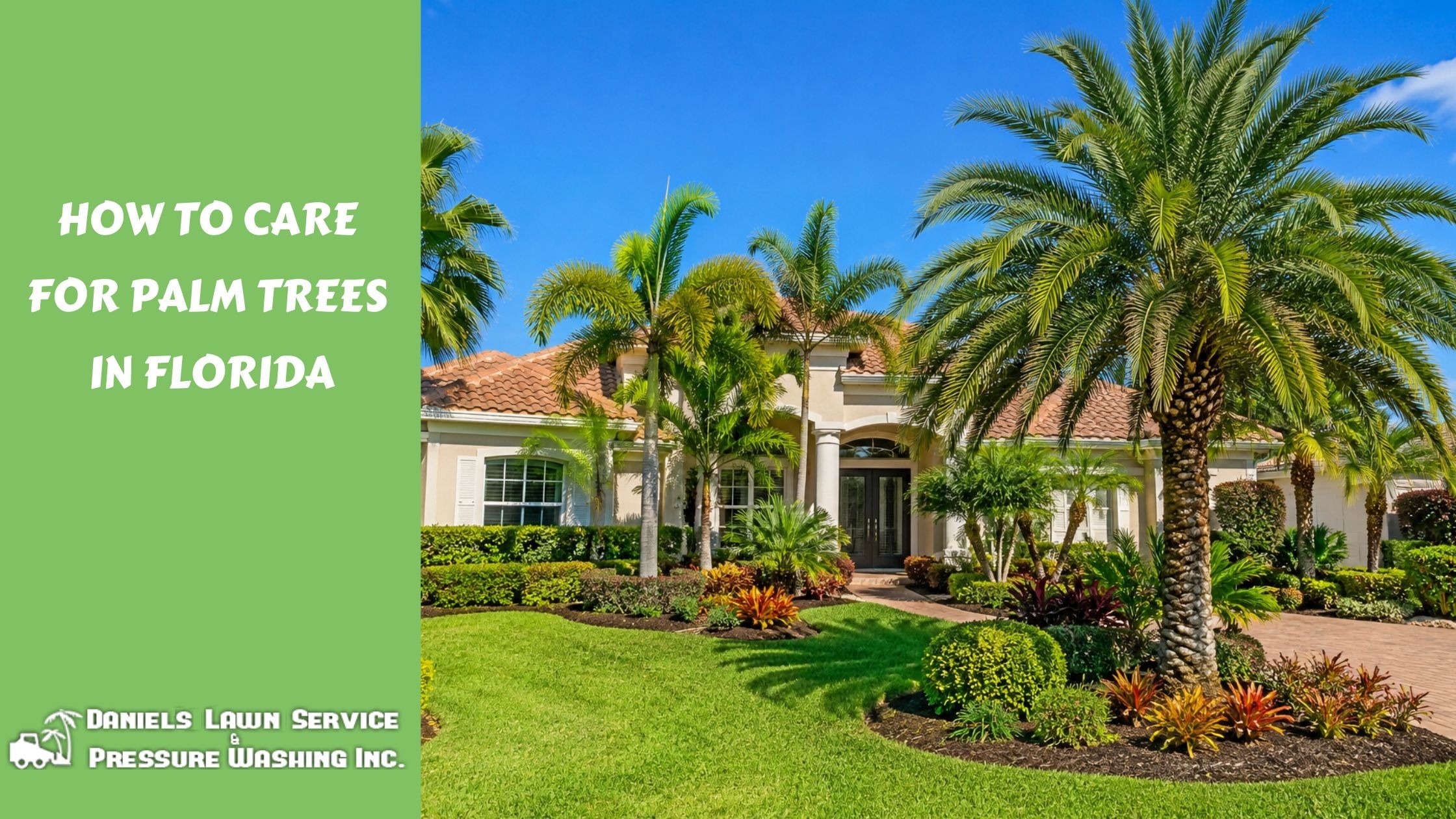
As with any other plant, first consider its intended purpose and location on your property. A towering, stately palm — such as the sable palm, Florida’s state tree — creates an eye-catching focal point that provides vertical interest to large yards and commercial properties. Smaller, more compact species — such as the pigmy date palm (also known as the robellini palm) make ideal accent pieces to set a tropical feel for courtyards, entrances, patios, and pool areas. Multi-trunk palms — such as the pigmy date palm and European fan palm — also provide a natural privacy screen without making the yard feel confined.
Keep in mind that not all palm species are the same when it comes to requirements for sunlight and soil conditions. As JMC Landscaping advises, “Find out if your chosen palm species prefer the shade or sunlight so you’d have an idea of where to plant them. As much as possible, avoid planting palm trees in areas with direct sunlight. Too much sun can burn the fronds, eventually killing them.”
The bottom line: Choosing a species suited to your property’s specific conditions is one of the most important steps toward long-term success.
Water Properly, Especially After Planting
Newly planted palms require regular watering while their root systems become established. During the first several months after planting, deep watering is essential. This encourages the roots to grow deeply into the soil rather than near the surface.
Once established, most palms become relatively drought-tolerant. However, during extended dry periods, supplemental watering may still be necessary.
Signs of under-watering include:
- Browning fronds
- Slow growth
- Wilting leaf tips
Overwatering can also be harmful, leading to root rot and nutrient deficiencies.
Fertilize with a Palm-Specific Formula
Florida’s sandy soils often lack important nutrients that palm trees require. The best way to make sure your palm tree has enough nutrients is to use a slow-releasing fertilizer specially formulated for palm trees. These products provide a good mix of nitrogen, potassium, magnesium, manganese and other minerals that support strong roots, lush green fronds and stable development. Slow-release formulations are especially helpful because they gradually release nutrients over time.
These slow-release fertilizers are available in granules, pellets, and spikes that deliver small doses over time directly to the palm’s roots. Over-fertilizing your palm tree can be just as harmful as not fertilizing, so it’s important to follow label directions.
The best way to apply granular fertilizer for palm trees is to broadcast it. Spread granules evenly underneath the canopy (leaf spread) starting one foot away from the trunk and spreading it out to and around the leaf spread. Do not mound fertilizer against the trunk, since concentrated nutrients can damage emerging roots. Be sure to water the area well after application.
Avoid Over-Pruning
Many homeowners mistakenly believe that removing large numbers of fronds makes a palm healthier. In reality, excessive pruning can weaken the tree and reduce its ability to produce food through photosynthesis.
As a general rule:
- Remove dead or completely brown fronds
- Leave healthy green fronds in place
- Avoid the “hurricane cut” or “pineapple cut” often seen on over-pruned palms — palm trees are naturally pliable, and bend rather than break in hurricane-force winds
Over-pruning can make palms more vulnerable to nutrient deficiencies, pests, and storm damage. Our blog post — “How to Prepare Your Central Florida Yard for Hurricane Season” — covers this topic in detail.
Watch for Nutrient Deficiencies
Palm fronds give useful signs regarding the health of the tree. As mentioned earlier, Florida’s sandy soils don’t necessarily contain nutrients essential to palm trees. Homeowners who learn to identify warning signals can address problems before permanent damage occurs. Be observant for these common signs of nutrient deficiency:
Potassium Deficiency
- Yellow or orange spotting on older fronds
- Premature frond death
Magnesium Deficiency
- Yellow bands along leaf edges
Manganese Deficiency
- Distorted or frizzled new growth
- “Frizzle top” appearance
Nitrogen Deficiency
- Pale leaves
- Reduced growth
- Early leaf shedding
Because nutrient deficiencies can resemble disease symptoms, proper diagnosis is important before treatment begins.
Monitor for Pests and Diseases
Palms are fairly hardy, but you need to examine them often for insects and illnesses. Healthy palms are naturally resistant to many issues, but stress produced by poor nutrition, dehydration or inappropriate pruning makes them more susceptible.
Check the leaves for any strange color changes, early browning, insects, holes in the trunk or fungus at the base. Florida’s environment is warm and humid, providing ideal circumstances for fungal illnesses that can quickly take hold if not addressed.
Potential issues include:
- Palm aphids
- Scale insects
- Whiteflies
- Ganoderma butt rot
- Lethal bronzing disease
Early signs of trouble may include:
- Discolored fronds
- Premature leaf drop
- Slow growth
- Crown decline
Regular inspections can help identify problems before significant damage occurs.
Maintain a Proper Mulch Ring
Mulch helps conserve moisture, suppress weeds, and improve soil conditions around palms. Organic mulches such as pine bark, pine straw, melaleuca, and eucalyptus are excellent for palm trees. They help the sandy soil retain moisture and naturally decompose to provide nutrients.
Best practices include:
- Applying 2–3 inches of mulch
- Keeping mulch several inches away from the trunk
- Replenishing mulch as needed throughout the year
Avoid piling mulch directly against the trunk, which can encourage rot and pest activity.
Protect Palms During Hurricane Season
Despite their flexibility, palm trees do need some protection from hurricanes. Trees planted in the last five years don’t have an extensive root system to anchor them against strong winds. Reinforce the trunks with 2×4 stakes when hurricane season begins, so you aren’t rushing to do so when a hurricane warning is issued.
To further reduce storm-related damage:
- Keep palms properly maintained
- Remove dead fronds before storm season
- Avoid excessive pruning
Healthy palms typically withstand storms better than stressed or neglected trees.
Know When to Call a Professional
Although routine palm maintenance is often straightforward, certain situations warrant professional assistance.
Consider contacting a lawn care or landscaping professional if:
- Fronds are rapidly discoloring
- You suspect disease or pest infestation
- Nutrient deficiencies persist
- Large palms require pruning
- Storm damage has occurred
Professional care can help diagnose problems accurately and ensure your palms remain healthy and beautiful for years to come.
The Take-Home Message
Palm trees can bring the beauty of a tropical resort to your home, but require proper care to thrive. Whichever species — or variety of species — of palm tree you choose, our team at Daniel’s Lawn Service & Pressure Washing is ready to help with a wide range of services, from landscape design to plant selection, installation and maintenance. We have experience planting trees of all types, and can also recommend the optimal location to plant in terms of soil, light, and aesthetic appeal. Call us today to learn how we can give you the lawn and garden of your dreams!
