

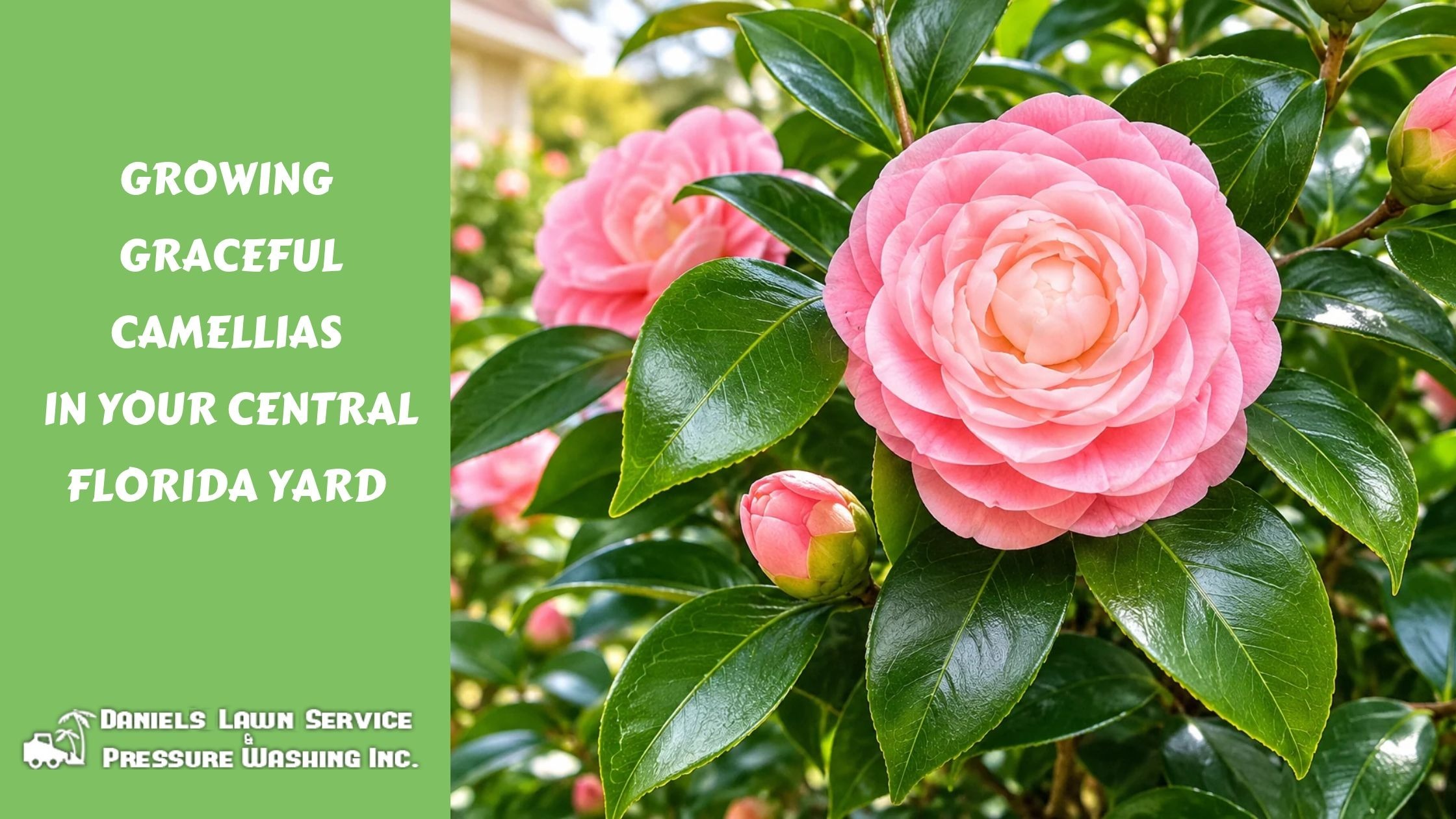
Looking for a way to add elegant flowers and year-round greenery to your Central Florida landscape? Camellias may be just what your yard needs! These beautiful perennial shrubs produce colorful blooms during fall and winter, bringing welcome color to the landscape when many other plants are flowering less frequently.
Despite their elite appearance, camellias don’t have to be reserved for expert gardeners. With the right variety, a suitable planting location, and a little routine care, homeowners can enjoy these graceful shrubs for many years.
Here’s what you need to know about growing camellias in your Central Florida yard.
Why Camellias Are a Great Choice for Central Florida Landscapes
Camellias have been popular in Southern landscapes for generations, and it’s easy to see why. Their glossy green leaves provide attractive foliage throughout the year, while their flowers add seasonal color in shades ranging from white and pale pink to deep red. According to UF/IFAS Gardening Solutions, camellias are versatile landscape plants that can serve as foundation plantings, privacy screens, accent plants, and hedges. They also work beautifully when several shrubs are grouped together.
Another advantage is their relatively slow growth and low-maintenance nature. Once established in a suitable location, camellias generally require little pruning and can thrive for decades. For Central Florida homeowners, they’re an excellent option for adding structure and seasonal interest to a front yard, backyard, or shaded garden area.
Choose the Right Camellia for Your Yard
Although there are many camellia varieties, two types are especially popular for Florida landscapes: Camellia sasanqua and Camellia japonica (also known as Japanese camellia). Understanding the differences can help you choose a shrub that suits your yard and your expectations.
Sasanqua camellias — Sasanqua camellias generally bloom earlier in the season, often beginning in fall and continuing into early winter. Their flowers tend to be smaller than those of Japonica camellias, but they can produce an abundance of blooms. Their smaller leaves and naturally graceful growth make them suitable for informal hedges, screens, and accent plantings. Sasanquas also tolerate more sunlight than Japonica varieties, although protection from harsh afternoon sun is still beneficial.
Japonica camellias — Japonica camellias typically bloom from winter into early spring. They generally have larger leaves and showier flowers, making them an attractive choice when you want a striking focal point in the landscape. These varieties prefer partial shade, particularly protection from the strong afternoon sun common in Central Florida.
When shopping for camellias, look for varieties recommended for Florida conditions and check the plant label for mature size, preferred light conditions, and flowering season. Choosing varieties with different bloom times can also extend the period of color in your landscape. For additional guidance, see the University of Florida’s Camellias at a Glance.
Find the Right Planting Location
Choosing the right location is one of the most important steps in growing healthy camellias. These shrubs can be long-lived, so it’s worth thinking about their future size and growing conditions before putting them in the ground.
Partial shade is generally ideal. A location with morning sunlight and afternoon shade often works well, particularly for Japonica camellias. Sasanqua varieties can tolerate more sun, but they still benefit from protection during the hottest part of the day. Avoid planting camellias in deep shade, where flowering may be limited. You’ll also want to choose a spot with good air circulation to help reduce pest problems.
Camellias can look especially attractive along the edge of a wooded area, beneath high tree canopies, or in a sheltered planting bed near the house. Just make sure they receive enough light and aren’t competing too heavily with nearby trees for water and nutrients. Before planting, consider how large the shrub will eventually become. Give it enough room to develop its natural shape without crowding walkways, windows, or neighboring plants.
Prepare the Soil Before Planting
Central Florida’s sandy soils can present a challenge for camellias. These shrubs prefer fertile, well-drained soil rich in organic matter, with an acidic pH generally between 5.0 and 6.5. Good drainage is particularly important. Camellias don’t tolerate persistently wet soil, and overly saturated conditions can lead to root rot.
If your soil is very sandy or doesn’t drain well, consider preparing the planting bed before purchasing your plants. UF/IFAS recommends improving the entire planting bed with organic matter when soil amendments are needed, rather than enriching only the hole where each shrub will go. If your yard doesn’t have suitable soil conditions, growing a camellia in a large container may be a practical alternative.
When Should You Plant Camellias?
For Central Florida homeowners, the cooler months are generally the best time to plant camellias. UF/IFAS recommends planting from November through February so the roots have time to become established before summer heat arrives.
When planting, dig a hole that is wider than the root ball but slightly shallower. Position the top of the root ball about 1 to 2 inches above the surrounding soil level to allow for settling. Planting too deeply can damage the shrub. Finish by applying a 2- to 3-inch layer of mulch — such as pine bark or pine straw — around the root zone. Keep the mulch away from the trunk and avoid piling it over the root ball. Mulch helps conserve moisture, moderate soil temperatures, and improve the appearance of the planting bed.
Watering and Fertilizing Your Camellias
Newly planted camellias need regular watering during their first year while their roots become established. Water deeply enough to moisten the root zone, but allow excess water to drain away. Once established, camellias can tolerate some dry periods. However, they benefit from supplemental irrigation during extended stretches without rain, particularly while flowering. The goal is to keep the soil reasonably moist without leaving the roots waterlogged. Check the soil before watering rather than automatically following a rigid schedule, since rainfall, soil type, and temperature all affect how quickly the ground dries.
Fertilizing is usually straightforward, too. Camellias growing in appropriate soil generally don’t need frequent applications. UF/IFAS notes that one or two applications annually may be sufficient for established landscape plants. If fertilizer is needed, choose a product appropriate for established camellias and follow the label directions. Spring and early summer are generally preferable to late-season fertilization, which can encourage tender growth before cooler weather. Avoid adding fertilizer simply because a shrub isn’t blooming well. Insufficient light, unsuitable soil pH, poor drainage, or other growing conditions may be the underlying problem.
Keep Pruning Simple
One of the appealing things about camellias is that they usually don’t require extensive pruning. Their naturally attractive growth habit often looks best with minimal interference. If a shrub needs shaping, prune it after flowering, generally in late winter or early spring. Remove dead, damaged, or crossing branches and trim selectively to maintain a balanced shape. Avoid heavy shearing, which can create an unnaturally dense outer layer of foliage and reduce light reaching the interior branches.
Timing matters, too. Camellias begin forming their next season’s flower buds well before the following bloom period. Pruning in late summer or fall can remove those buds, leaving you with fewer flowers. For most residential landscapes, a light annual inspection and occasional selective pruning should be enough to keep camellias looking neat and healthy.
Watch for Common Camellia Pests
Camellias are generally hardy shrubs, but a few pests can occasionally cause problems. The most common include tea scale, aphids, and spider mites. Tea scale is particularly worth watching for because it often appears on the undersides of leaves. Signs may include a whitish, fuzzy coating beneath the leaves and yellow speckling on their upper surfaces.
Aphids tend to feed on new growth, causing leaves to curl or become distorted. They can also produce a sticky substance that encourages black sooty mold. Spider mites may become more troublesome during hot, dry weather. Their feeding can cause rusty or pale speckling on the foliage.
Make a habit of inspecting your camellias occasionally, especially the undersides of the leaves. Catching problems early can make them easier to manage. A strong spray of water may help dislodge aphids and mites, while tea scale may require an appropriate horticultural oil treatment. Always follow product directions and avoid spraying plants under stressful conditions. If you’re uncertain about the cause of a problem, your county’s UF/IFAS Extension office can help with identification and management recommendations.
Proper spacing, good air circulation, suitable soil, and appropriate watering can also help reduce the likelihood of serious problems.
Make Camellias Part of a Beautiful Landscape
Camellias are attractive enough to stand alone, but they can also contribute to a more cohesive landscape design.
Consider these ideas for your Central Florida yard:
- Create a welcoming entrance. Plant camellias in suitable shaded areas near the front of your home to add greenery and seasonal blooms.
- Add color beneath trees. Where light and root competition permit, camellias can bring color to the edges of tree canopies.
- Build a natural screen. Plant appropriately sized varieties along a property boundary or in a landscape bed to create a leafy backdrop.
- Combine different bloom times. Pair early-flowering Sasanqua varieties with later-flowering Japonica varieties to extend the display across fall and winter.
- Complement existing landscaping. Combine camellias with other shade-tolerant plants that share similar soil and moisture requirements.
- Spruce up outdoor living spaces. Camellias can lend flair to patios, garden lounging spaces, and shady backyard nooks.
Remember to account for mature plant size when planning your layout. Proper spacing helps each shrub develop its natural form and makes routine landscape maintenance easier.
The Take-Home Message
Camellias offer a wonderful combination of evergreen foliage, elegant flowers, and relatively simple maintenance. The key to success is selecting varieties suited to Central Florida, providing partial shade, preparing well-drained acidic soil, and giving young plants the water they need to establish themselves. With thoughtful placement and occasional care, these graceful shrubs can become a lasting feature of your home’s landscape.
If you want an expert’s touch to incorporate camellias into your landscape, call us! Our team at Daniel’s Lawn Service & Pressure Washing is ready to help with a wide range of services — from landscape design to plant selection, installation and maintenance.
In addition, our full-service company provides tree trimming, yard maintenance, pressure washing, land clearing, bush hogging, and so much more. Contact us today so we can do the work, and you can do the enjoying! We proudly serve all of Central Florida — including Orlando, Sanford, Longwood and Lake Mary! We look forward to helping you achieve your goals and bring your vision to life!
